UK Casinos That Accept Echeques: How to Check
 Available in GB
A general payment listing may not match the options shown in a UK account’s live cashier.

Table of Contents
- Checking Whether an Echeque Option Is Actually Available
- Deposits and Withdrawals: The Route Must Work Both Ways
- Comparing Casino Payment Terms Without a Ranked Shortlist
- What an Echeque Casino Payment Would Need to Match
- Confirming Acceptance Before Making a Deposit
- New Casino Payment Pages: Check the Cashier, Not the Label
Checking Whether an Echeque Option Is Actually Available
A casino’s payment page can describe a method without establishing that it is available to a particular customer at the point of payment. For an echeque, the distinction matters: a reference on a general payments page is not the same as a selectable option in a UK account’s cashier. Acceptance should be treated as confirmed only when the method appears in the live payment interface for that account.
This is a narrower test than checking whether a casino has a UK-facing website, or whether its public pages mention electronic payments. A site can serve customers in Britain and display a broad selection of payment methods while the cashier presents a different set of choices. Availability can depend on the account and the circumstances shown in that interface. A general label cannot settle those details.
The phrase “echeque casino” can also be used loosely in promotional or review material. It may appear in a headline, a payment-method summary or a list of methods discussed across several markets. None of those placements, on its own, demonstrates that a UK customer can select an echeque. The useful evidence is more specific: the method is identified in the casino’s own cashier for the relevant account, with instructions that make clear it can be used for the transaction being considered.
When looking for a UK casino that accepts e-cheques, check that the payment method is available to you and review the stated withdrawal timing. The list below gives the payout-speed information available for each operator.
Payout speed: 1-3 business days The available information lists a payout speed of 1–3 business days. E-cheque acceptance is not confirmed by the information provided.
Payout speed: 1-3 business days The available information lists a payout speed of 1–3 business days. E-cheque acceptance is not confirmed by the information provided.
Payout speed: 1-3 business days The available information lists a payout speed of 1–3 business days. E-cheque acceptance is not confirmed by the information provided.
Payout speed: 1-3 business days The available information lists a payout speed of 1–3 business days. E-cheque acceptance is not confirmed by the information provided.
Payout speed: 1-3 business days The available information lists a payout speed of 1–3 business days. E-cheque acceptance is not confirmed by the information provided.
Payout speed: 1-3 business days The available information lists a payout speed of 1–3 business days. E-cheque acceptance is not confirmed by the information provided.
Payout speed: 1-3 business days The available information lists a payout speed of 1–3 business days. E-cheque acceptance is not confirmed by the information provided.
Payout speed: 1-3 business days The available information lists a payout speed of 1–3 business days. E-cheque acceptance is not confirmed by the information provided.
Payout speed: 1-3 business days The available information lists a payout speed of 1–3 business days. E-cheque acceptance is not confirmed by the information provided.
Payout speed: 1-3 business days The available information lists a payout speed of 1–3 business days. E-cheque acceptance is not confirmed by the information provided.
That distinction applies equally to broad claims about online casinos accepting echeques in the UK. A page may be written for a UK audience but still describe a payment option that is not offered to every account or is not currently presented in the cashier. The country in a page heading does not convert a general statement into account-level confirmation. Nor does a logo or a list of payment names prove that the method can be selected.
A specialist review’s payment-method summary, for instance, may list Visa and Mastercard. That is useful as a pointer to what the page reports, not as confirmation of current UK availability or of eligibility for a particular card product. The cashier still needs to be checked. The same standard is appropriate for an echeque reference: third-party descriptions can identify something worth investigating, but the casino’s current payment interface is the relevant place to confirm whether it is offered.
What counts as confirmation
A method is meaningfully available when it is visible as a selectable option in the account’s payment area, rather than merely mentioned in explanatory copy. The label should identify the method clearly enough to distinguish it from a general bank-payment category or another electronic payment route. If the page uses an unfamiliar term, the accompanying instructions should explain what is being selected. A vague reference to “bank payment” does not establish that the route is an echeque.
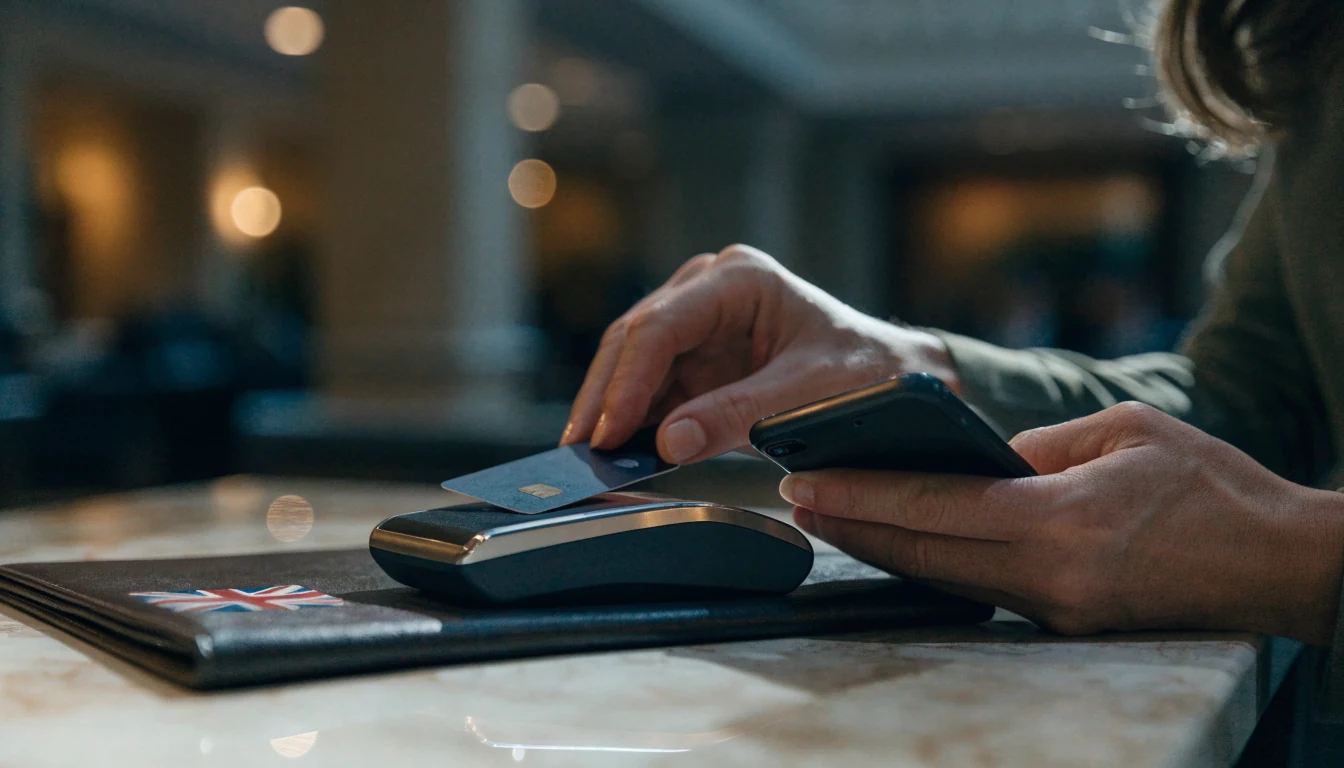
The distinction is not pedantic. A payment page can group several routes under one broad heading, while the actual choices appear only after the account is opened or a payment action is started. If the cashier offers a bank transfer, that does not prove it offers an echeque. If a page lists electronic payments in general, that does not prove every electronically processed method is supported. The method itself must be named or described clearly in the interface.
The interface should also be the casino’s own, not an image copied into a review or a static graphic on a promotional page. A screenshot may show a real option from another time, another account context or another market. It can be a reason to inspect the cashier, but it cannot establish present availability. A text page can age in the same way. Payment descriptions are operational information, and operational information can change.
Where a site asks for sign-in before displaying its payment options, a public page may not expose the full list. That does not prove the method is absent; it means the public page cannot confirm its presence. The correct conclusion is limited: availability has not been established from that page. Treating an unclear or incomplete description as a positive answer would replace evidence with assumption.
Why a UK-facing page is not enough
A UK-facing casino page can establish the intended audience of the content, but it does not necessarily establish which payment options are available in the live cashier. Pages may use general wording, cover more than one customer group or remain online after their details have changed. A payment method name in a heading is therefore weaker evidence than a method presented as selectable inside the account.
Attention: A UK-facing page or a method name in a heading is weaker evidence of availability than a selectable option found inside the account cashier.
There is also a difference between a site being accessible from Britain and being authorised to serve the British market. Remote gambling licensees offering real-money gambling to customers in Great Britain must hold the relevant UK Gambling Commission licence. Online gambling is legal in the UK only through licensed and regulated sites. A UK-oriented payment page should not be treated as a substitute for that legal status, and a payment-method claim does not establish it.
The licensing question and the cashier question are separate checks. A current UK Gambling Commission licence says something about the operator’s regulatory position; it does not show that a particular payment method is available. Conversely, a cashier entry does not by itself establish that the operator is authorised to serve customers in Britain. Each claim needs its own evidence. Combining them into a single impression of legitimacy or availability is not a reliable test.
The same separation applies to claims that a method is “accepted in the UK”. That wording may refer to a provider’s general reach, a casino’s broad market coverage or an option that appears only in some circumstances. It does not necessarily mean that an account registered for use in Britain will show the method. For a practical decision, the relevant claim is not that echeques exist as a payment category somewhere; it is whether the specific casino’s UK account cashier presents one.

Reading lists and labels carefully
A payments list can be useful, but its level of detail matters. A list that names a method directly is more informative than a generic phrase such as “banking options”. Even a direct name, however, remains a statement on a page until the cashier confirms it. A list may describe methods supported by the operator overall, not options available in every location or for every account.
Terms can also be imprecise. “Electronic cheque”, “e-cheque” and “echeque” may be written differently, and a page may use a shortened or grouped label. Spelling alone is not decisive. The important point is whether the casino explains the route sufficiently for the selected option to be identifiable. If a label could refer to more than one kind of payment, it is not clear confirmation of an echeque.
A broad payment logo deserves the same caution. It can indicate that a brand or service is associated with the site, but it may not show which products are enabled, whether the option is currently available in the UK cashier, or whether it is selectable for the account in question. A logo is a signpost, not a transaction screen.
Claims such as “best” or “top” do not improve the evidence. A ranking can compare casinos only if its underlying availability claims are established. Where a list relies on a page label, a copied method list or an undated statement, the ranking adds presentation rather than proof. The word “best” may describe an editorial judgement, but it cannot establish that an echeque option is present in a particular cashier.
- Check the live cashier for a selectable option
- Verify the method is clearly identified
- Use the casino’s own interface
- Rely on promotional headlines
- Trust static graphics or screenshots
- Assume acceptance from a general label
Applying the check in 2026
For someone looking for a UK casino payment option in 2026, the year in a page title does not make the information current. A page can carry a recent date and still repeat a general description. The meaningful check remains the live cashier, because that is where the operator presents the payment choices available to the account at the time of inspection.
A useful assessment keeps the conclusion proportionate to what is visible. If the cashier explicitly offers an echeque and provides a clear selection path, that supports a claim of availability for that account at that point. If the method appears only in a review, a promotional summary, a logo strip or a generic payment category, availability remains unconfirmed. If the cashier does not display it, a page elsewhere should not be used to imply that it can be selected.
This approach avoids two opposite errors. The first is assuming acceptance from a broad UK-facing claim. The second is treating a missing public payment list as proof that no account can ever see the method. Neither conclusion follows from incomplete information. The defensible statement is narrower: the cashier either displays a clearly identified option, or it does not provide confirmation at the time checked.
That is the standard needed for a search for casinos that accept echeques in the UK in 2026. A list of names is not useful if the method has not been confirmed in each relevant cashier, and a page label is not enough to establish that confirmation. The point is not to infer acceptance from the surrounding wording. It is to identify the payment option where the casino actually presents it.

Deposits and Withdrawals: The Route Must Work Both Ways
A payment method shown for deposits does not, by itself, establish a complete payment route. It confirms only that the cashier may take funds through that method. The withdrawal route is a separate part of the transaction, governed by the casino’s payment controls and the rules applying to the original deposit.
That distinction matters when assessing any casino described as accepting echeques. A deposit facility, if one is offered, would not prove that winnings can be sent back by echeque, or that the method can be used for both directions. The cashier’s withdrawal options and the casino’s payment terms determine what happens after a deposit has been made.
Deposit access is not withdrawal access
Payment pages often describe the ways a customer can fund an account. A withdrawal page has a different job: it explains how money may leave it. A method appearing in the first place should not be treated as confirmation that it appears in the second.
The difference can affect the full transaction path. A deposit may be accepted through one route, while a withdrawal is directed elsewhere under the casino’s controls. If the payment method is not available for payouts, the casino may need to use another permitted route or request further information before proceeding. The exact handling depends on the casino’s terms and the payment arrangements available for the account.
For an echeque deposit, the practical question is therefore not simply whether the cashier accepts the payment. It is whether the casino can process a payout through the same route, and what procedure applies if it cannot. Without that distinction, a deposit method can look more complete than it is.
A deposit facility does not prove that winnings can be sent back via the same method; withdrawal options are governed by separate casino controls and terms.
The original-source control
UK anti-money laundering rules generally require payouts to go back to the original payment source. Returning funds in this way is also a common anti-fraud control. It links the payout to the route used to fund the account rather than treating every available withdrawal option as interchangeable.
This is commonly described as a closed-loop approach: funds are returned through the source used for the deposit, where the relevant payment arrangements allow it. The control can apply even when another method appears on the withdrawal screen. A visible alternative does not automatically override the requirement to return funds to the original source.
The result is that a method’s role needs to be understood in context. A payment option may be deposit-only, may support both deposits and withdrawals, or may be subject to conditions that depend on the transaction. The label alone does not settle which applies. The casino’s cashier and payment terms need to be read together.
This is not a technical distinction without a financial consequence. If a deposit is made using a route that cannot receive the return payment, the payout may need to follow another process. That can mean an additional check before funds are released. The relevant cost here is not a quoted fee; it is the possibility of extra administration and delay when the route does not match the casino’s payout controls.
Alternative payout routes can add checks
Where a payout cannot be returned through the original source, an alternative may be considered under the casino’s rules. That alternative can require additional verification. The purpose is to establish that the proposed route is acceptable and that the payment can be processed securely.
A different withdrawal option should not be assumed to be an automatic substitute. The casino may need to review the route before approving it, and the customer may need to provide information or documents. The specific requirements vary by operator and transaction, so a general claim that an alternative is available cannot establish how it will be handled in an individual account.
The same point applies when a cashier displays several withdrawal methods. Their presence does not mean each can receive every deposit or payout. Payment controls can restrict the route according to the original funding method, account checks, or the casino’s own processing arrangements. A menu of options is not a promise that every route is open for every transaction.
For a casino payment described as an echeque, the key distinction remains between acceptance of money and return of money. A deposit confirmation shows that the casino processed an incoming payment; it does not confirm what will happen to a later withdrawal. The payout route should be checked separately, including whether a return to source is required and what happens if the source cannot receive funds.
Read the transaction path before relying on it
The cashier should be treated as two connected but distinct stages: funding the account and withdrawing from it. Before relying on a payment method, the relevant terms need to explain how each stage works. If the deposit screen names a method but the withdrawal information is silent, that silence does not establish that withdrawals through it are supported.

A clear payment path identifies the original source, states whether the same method can receive payouts, and explains what alternatives may be used if it cannot. It also makes clear that alternative routes may involve additional verification. These details matter more than a broad statement that a casino accepts a payment type, because the broad statement may refer only to deposits.
This does not mean that every transaction will follow an identical sequence. Anti-money laundering controls and anti-fraud checks exist to govern the movement of funds, and an alternative route can trigger additional review. The relevant question is whether the cashier and terms describe a workable path from deposit to payout, rather than merely an available way to put money into the account.
A payment option should therefore be assessed by its full route. If it can fund an account but cannot receive a payout, it is not a two-way payment method for that transaction. If the casino returns funds to the original source, that control should be understood before depositing. If an alternative is needed, its availability and verification requirements should be confirmed rather than presumed.
Comparing Casino Payment Terms Without a Ranked Shortlist
A payment method is not inexpensive simply because the cashier displays no casino fee. The total cost can be distributed across several charges: a casino fee, a payment-provider fee, an issuer or bank fee, an exchange-rate spread, or a network fee. The relevant comparison is the cost of the same intended transaction through each available route, not the label attached to the method.

A specialist review describes these as the main cost categories to check. Their presence depends on the payment route and the transaction, so a general claim that one method is “free” does not settle the calculation. A fee may be charged by a party other than the casino, while the exchange rate can affect the amount received without appearing as a separate line item.
Compare the total, not one visible charge
The useful figure is the difference between the amount sent and the value credited or converted after all applicable charges. Before relying on a displayed fee, the terms need to distinguish between a charge imposed by the casino and one set by the payment provider, bank, card issuer or network. Where a conversion is involved, the rate used matters as well as any stated fee.
This avoids a common comparison error: placing a route with a visible flat charge beside one with no stated charge and treating the second as cheaper. A conversion spread can cost more than a visible flat fee. The comparison therefore needs the rate applied to the transaction, not only the fee table. A low or zero headline charge is packaging; the converted total is the substance.
There is no universal lowest-fee method. A specialist review frames the comparison around casino charges, provider fees, currency spread and network costs for the actual amount being considered. Those components should be checked together. If one term cannot be established, the total cost cannot be treated as settled.
An echeque label does not answer these questions. The payment name alone does not establish whether a charge applies, which exchange rate would be used, or whether another party adds a cost. The financial comparison starts with the terms attached to the specific route and account, rather than a general description of the method.
Charges imposed directly by the operator for the transaction.
Costs set by the payment provider, bank, card issuer or network.
The spread applied when converting between account and payment currencies.
Currency can change the calculation
The account currency is central to the comparison. Specialist casino-review pages state that GBP is supported at some sites, but that statement does not confirm the currency set for a particular account. The account currency should be confirmed before the first transaction. If the account and payment are handled in different currencies, conversion may enter the calculation.
A conversion can affect the total even where the cashier shows no separate conversion fee. The relevant rate may include a spread, so the amount credited or charged can differ from a simple comparison using published market rates. The comparison should use the rate actually presented for the transaction, where it is available, and account for any additional provider or bank charge.
Currency also affects comparisons between payment terms across different sites. A method shown with a fee in one currency cannot be compared cleanly with a route quoted in another without accounting for conversion. The same applies to a stated minimum or other transaction condition: it has a different practical value if conversion changes the amount taken from the originating account. No single headline figure captures those differences.
A practical comparison record
A short record keeps the terms comparable. For each route under consideration, note:
- the account currency;
- any casino charge;
- any payment-provider, bank, issuer or network charge;
- the conversion rate or spread, if applicable;
- the resulting amount credited or charged.
The record should use the same transaction amount and currency assumptions for each route. Otherwise, a difference may reflect the inputs rather than the payment terms. If a provider’s charge depends on its own account terms, that cost belongs in the comparison even when the casino cashier does not show it.
The comparison also needs a clear boundary. A casino’s published payment terms may describe only its own charge, not every possible cost imposed by a bank or payment provider. Conversely, a provider’s fee schedule may not include the casino’s charges or the rate applied when a currency conversion occurs. The figures should not be added twice, but neither should a cost be omitted merely because it appears outside the casino’s page.
For a UK account, GBP is the relevant currency to confirm rather than assume. A general statement that GBP is supported is not confirmation that the account itself is denominated in GBP. That distinction matters before any transaction: once a different account currency or conversion route is involved, the apparent fee comparison may no longer reflect the amount ultimately debited or credited.
Payment terms are therefore comparable only when the same costs and currency basis are included. A ranked label cannot replace that calculation. The lower-cost route is the one with the smaller total cost under the actual account and transaction conditions, not necessarily the one with the fewest visible fees.
What an Echeque Casino Payment Would Need to Match
An echeque payment would need to be tied to the same customer who holds the casino account. The relevant match is not simply between a payment label and a cashier option: the account details and the payment route must point to one person. When they do, basic ownership questions are less likely to create avoidable friction around a transaction.
Ownership Match
A mismatch between the name on the casino account and the payment account can cause avoidable friction and transaction delays.
That principle applies to any payment method, including an echeque if a casino makes one available. A method’s name does not establish who owns the account behind it. The useful check is whether the payment account is held in the casino customer’s own name and whether the casino account uses consistent personal details. A mismatch can turn a routine transaction into an ownership issue that needs clarifying.
Keep the account details consistent
The casino account and payment account should identify the same customer. Names should not vary between accounts, and other personal details should be entered accurately and consistently. A shortened name, an old address or a spelling difference may have an ordinary explanation, but the operator cannot infer that explanation from the payment label alone.
KYC checks concern identity and account ownership, so accurate details matter before a payment is attempted, not only if a query later arises. If a payment account belongs to somebody else, the transaction no longer follows the cleanest route: the casino account identifies one customer while the payment route identifies another. That gap can prompt additional questions or delay resolution. It is avoidable friction, not a price feature.
A payment account used by the customer is therefore a stronger fit than a route funded or controlled by another person. The same logic applies where a household shares access to banking arrangements. Shared access does not make two people the same account holder. Ownership should be clear from the details attached to the payment account, rather than assumed from who can log in or who intends to use the funds.
One named account, used consistently
The cleanest arrangement is often one named account used consistently for deposits and withdrawals. Consistency gives the operator a straightforward ownership trail: the casino customer and the holder of the payment account are the same person. Switching between accounts with different names or details makes that trail less clear, even where there is no dispute about who is using the casino account.

This is a matter of transaction identity rather than convenience. A payment route may appear suitable because it is available, but ownership still has to line up. An echeque casino payment would need to meet that same condition: the route should belong to the customer whose casino account is being funded. Searching for an echeque option does not change the ownership test.
Where payment details have changed, the account information should remain current and consistent. If an old payment account is no longer held by the customer, continuing to use its details creates an obvious discrepancy. A new account in the customer’s own name gives a clearer match than attempting to rely on a previous arrangement.
What a mismatch changes
A mismatch does not by itself establish wrongdoing. It does, however, leave an operator with a practical question: whose account is involved in the transaction? Until that is clear, basic ownership details can create extra contact or verification work. The customer may need to explain the difference or provide information that resolves it. Keeping the details aligned reduces the chance of that avoidable step.
The same standard applies whether the payment is described as an echeque or by another method. The payment name cannot substitute for a match between account holders. Nor does a UK-facing service or a familiar payment term establish that a particular route belongs to the casino customer. Ownership is specific to the account being used.
For UK players considering an echeque, the relevant comparison is therefore between the casino account holder and the holder of the payment account, not merely between the payment method and the deposit screen. A consistent identity across both sides gives the transaction a clearer basis. If the details identify different people, the route is not the cleanest fit, regardless of how it is labelled.

Confirming Acceptance Before Making a Deposit
At the payment screen, the method selected must match the method shown in the final deposit details. A page describing an echeque payment does not settle what will be processed: the cashier should identify the actual route before confirmation. If the displayed option, payment description or destination differs from the intended method, the transaction should be stopped rather than treated as an echeque deposit.
The amount and account currency need the same check. A specialist review may say that GBP is supported, but that statement is not a substitute for the currency displayed in the account and cashier. Confirming GBP before the first transaction can prevent an unintended conversion; a currency label on a general payment page does not prove that the individual account is set up in that currency.
These checks belong immediately before payment, when the selected method and currency are visible together. The account balance, payment confirmation screen and any provider authorisation should be consistent. If the cashier presents a different currency or routes the payment through another method, proceeding may create a transaction that does not match the intended arrangement.
A UK-licensed casino must prompt a new customer to set a financial limit before the first deposit and provide account-level controls for managing limits. That requirement is separate from payment acceptance: a method appearing in the cashier does not replace the account’s own limit settings.
For a deposit described as an echeque payment, acceptance is confirmed only when the cashier offers that method for the account and the final payment details still identify it. Currency confirmation is a separate condition, not an assumption based on a UK-facing page.

New Casino Payment Pages: Check the Cashier, Not the Label
A casino described as new may have a payment page assembled before its cashier is fully configured, or a page that has not kept pace with later changes. The word “new” says nothing about whether an echeque is currently available. A payment logo, a general list of banking options or a broad claim about supported methods is not confirmation that a particular account can use that route.
A specialist review may list Visa and Mastercard, but those references do not establish current UK availability or whether a particular card product is eligible. The cashier is the relevant record for the account in use. If echeque is absent from its method choices, a page title or promotional label cannot make it available. If it appears, the displayed terms still need to identify what the method does and any conditions attached.
This distinction matters when comparing recently launched casinos with established payment pages. Site copy can be reused, payment panels can be updated separately, and a method name can be used loosely. None of those signals settles acceptance. The decision point is the live cashier, not the age of the casino or the wording of a landing page.
For a UK-facing casino, payment information should also be considered alongside the operator’s regulatory status: remote gambling licensees serving Great Britain must hold the relevant UK Gambling Commission licence. That is a separate check from payment availability. A valid licence does not prove that an echeque option exists, just as an echeque label does not establish that the operator is licensed.
No new-site label should therefore be treated as evidence of echeque acceptance. The method needs to be explicitly presented in the current cashier, with its applicable terms visible, before it can be treated as an available option.
What is the fastest withdrawal method for UK casinos?
PayPal, open banking services and debit cards linked to fast-payout systems are generally among the quickest options. The casino’s approval process and your verification status also affect how soon funds arrive.
Do UK casino withdrawals require verification?
Casinos may need to complete verification before approving a withdrawal, and first withdrawals can take longer while checks are completed.
Which method has the lowest fees?
There is no universally lowest-fee method. Compare casino and provider charges, currency conversion spreads and any bank or network fees for the specific transaction.
Are fast casino withdrawals guaranteed?
No. Withdrawal speed depends on the casino’s approval process and whether your account is fully verified; bank transfers can also be affected by cut-off times, weekends and currency conversion.
Why must withdrawals return to the deposit method?
Returning funds to the original payment source is a common anti-fraud and anti-money-laundering control. Using another route may require additional verification.
Can I deposit in GBP?
Yes, GBP is supported, but confirm your account currency before your first transaction to avoid conversion costs.
Written by the editors at Muasamthongthai.com.