Deal or No Deal Casino UK: Slot Guide
 Available in GB
The guide explains qualification, optional prize Top Up and how banker offers and briefcase choices fit into the slot’s stages.

Table of Contents
- How the Deal or No Deal Slot Works
- Playing the Online Slot: Banker Offers and Choices
- Online Play and the Cost of Taking an Offer
- Free Play: Learn the Round Before Stakes Apply
- Double Action, Golden Box and Bonus Claims
- Free Spins and Box Clever: What Can Be Verified
- What Happens to the Last Briefcases?
- Reviewing Double Action and What’s in Your Box
- What Counts as a Perfect Play?
- Free Online Play: The Game-Show Decision Behind the Slot
How the Deal or No Deal Slot Works
The Deal or No Deal slot is structured in stages rather than as a single uninterrupted game. Players first face a qualification stage. Only after qualifying can they move on to the main Deal or No Deal game, with Top Up available as an optional step intended to add to prizes. This order matters: the main game is not the first event, and Top Up is not described as compulsory.
Qualification depends on the position of three rings. All three must land on a gold slice for the player to qualify. The requirement is an all-three condition, not a partial match: landing fewer than three rings on gold does not meet the stated rule. That gives the opening stage a clear function. It determines whether play proceeds to the prize-related option and the main game, rather than being a decorative introduction to them.
Top Up sits between qualification and the main game in the overall sequence. Its stated purpose is to add to prizes, and its optional status means it is a choice, not a mandatory charge or step. The relevant distinction is between qualifying and then deciding whether to use Top Up. Qualification opens the route forward; Top Up is a separate feature within that route. The main Deal or No Deal game follows. The sequence can therefore be read plainly: qualify, optionally use Top Up, then enter the game.
When weighing a Deal or No Deal casino option in the UK for 2026, payout speed is one practical detail to check. This list gives a concise reference point for the operators with that information available.
Payout speed: 1-3 business days Dieselwin lists a payout speed of 1–3 business days, a useful detail to consider when assessing this casino.
Payout speed: 1-3 business days NightWin lists a payout speed of 1–3 business days. That gives readers a stated timeframe to factor into their choice.
Payout speed: 1-3 business days SpinFormula’s listed payout speed is 1–3 business days, providing a clear point of reference for prospective players.
Payout speed: 1-3 business days Revery Play lists payouts as taking 1–3 business days. This is the available practical detail to consider for this operator.
Payout speed: 1-3 business days NightLuck gives a payout speed of 1–3 business days, which may help readers assess how quickly withdrawals are processed.
Payout speed: 1-3 business days Amunbet lists a payout speed of 1–3 business days. Readers can use this stated timeframe as one factor in their review.
Payout speed: 1-3 business days Zombillion’s listed payout speed is 1–3 business days. No further operator-specific details are provided here.
Payout speed: 1-3 business days BeOnBet lists payouts at 1–3 business days, offering a straightforward timeframe to keep in mind.
Payout speed: 1-3 business days EvoSpin states a payout speed of 1–3 business days. This is the available detail relevant to evaluating the operator.
Payout speed: 1-3 business days Jetsetspins lists a payout speed of 1–3 business days, giving readers a stated timeframe to consider.
That format places the slot in the same broad family as the television title, but the slot should be understood through its own stages and rules. The show’s name supplies the recognisable theme; it does not mean every part of the slot follows the television programme’s format. For a casino slot, the practical starting point is the qualification condition and the transition into the main game. The three-ring rule is the specific gate into that sequence.
The expected return figure associated with the game is 95.42%. An affiliate review reports that this figure appears in the game help files. It should be treated as a stated expected-return figure, not as a promise about the outcome of a particular play session. Expected return is a statistical measure of the game’s theoretical payout over play, not a forecast that an individual will receive that proportion back. A short run can produce a different result, and the percentage does not settle whether a particular session ends in a gain or loss.
The source and scope of the figure matter. The number is reported through an affiliate review referring to game help files; it is not a market-wide rate for Deal or No Deal-branded slots, nor a general return figure for UK casino slots. A title or theme alone cannot establish that another version has the same return. The figure belongs to the game description being discussed, and should not be transferred to other games simply because they use the same name or theme.
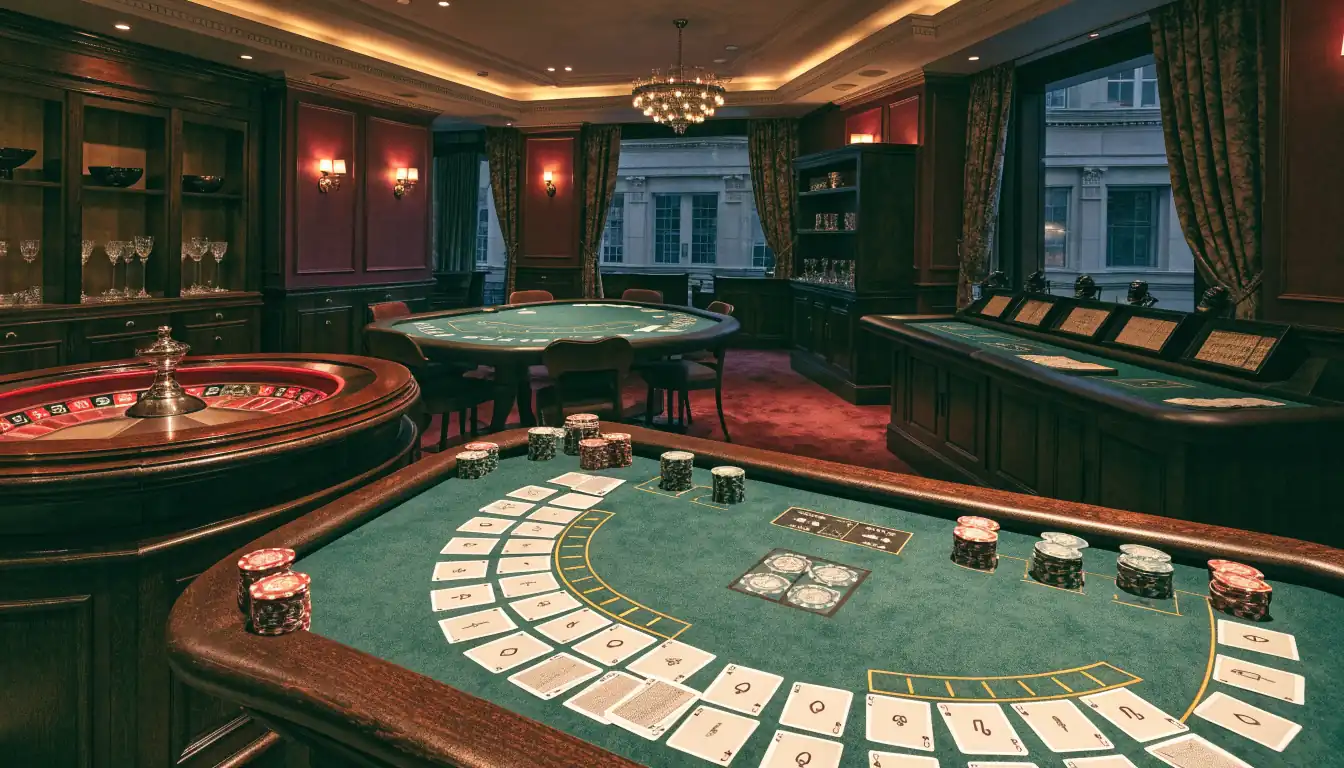
In the United Kingdom, online casino activity sits within a licensing framework. The UK Gambling Commission regulates gambling, including online casinos, and is the sole regulator for commercial gambling in Great Britain. Its remit over remote gambling offered to consumers in Great Britain applies regardless of where an operator’s key equipment is located. For a player assessing a Deal or No Deal slot in the UK market, that makes the operator’s regulatory status relevant alongside the game’s stated mechanics.
The Commission issues operating licences to gambling businesses and personal licences to individuals working in regulated roles. These are distinct forms of permission: an operator’s licence concerns the business providing gambling, while personal licences apply to individuals in specified operational positions. The distinction helps explain why regulation is not simply a matter of where a game’s software or servers happen to be. Remote gambling directed at Great Britain is within the Commission’s regulatory reach even when the relevant equipment is elsewhere.
The practical reading of the game is therefore a sequence and a condition, not a promise of a particular prize: qualification requires all three rings to land on gold; Top Up may be used after qualifying; and the main game follows. The reported 95.42% expected return is a separate statistical detail, with its source understood, rather than a guarantee attached to each play. Together, those points give a concise basis for understanding how this Deal or No Deal slot is arranged without confusing its opening qualification stage with the decisions that take place later in the game.
Expected Return
The expected return for this game is stated as 95.42% in the game help files, which is a theoretical statistical measure rather than a guaranteed payout for individual sessions.
Playing the Online Slot: Banker Offers and Choices
The bonus round is organised around a repeated decision: briefcases are opened, the Banker responds with an offer, and play either stops at that point or continues. That structure gives the Deal or No Deal slot machine game its central tension. The offer is not a separate prize event; it is a proposed stopping point within a round that is still in progress.
The sequence is easier to understand as a series of checkpoints than as one uninterrupted reveal. A group of briefcases is opened, reducing the number still in play. The Banker then makes an offer. The player chooses whether to accept it or reject it and continue. Further openings lead to another offer, with the same choice returning as the round advances.
There are four Banker offers before the final stage. The exact contents of the briefcases opened before each offer are part of the game’s unfolding information, but the decision format stays consistent: an offer arrives after a batch has been revealed, and the player decides whether that is an acceptable point to stop. No separate rule is needed for each offer; the question is repeated under changing circumstances.
This pattern is what distinguishes the bonus from a simple sequence of random reveals. Opening briefcases changes what remains unknown, while the offer provides a competing route out of the round. Continuing preserves the possibility of a later offer, but it also means proceeding without taking the current one. That is the whole choice at each checkpoint. The game does not turn the decision into a prediction with a guaranteed correct answer.

In a Deal or No Deal online slot machine, the presentation may resemble the television format, but the practical decision is narrower than the show’s dramatic framing suggests. At each offer, the relevant alternatives are to accept the Banker’s proposal or keep playing. The player is not required to make an additional selection about the value of every unopened case before moving on. The game advances through its prescribed opening sequence, then presents the next decision point.
That distinction matters when assessing the offer. It is not an instruction to stop, and it does not settle the round automatically. It is a choice presented while unopened briefcases remain. Continuing means the round proceeds to further reveals and, if play reaches the next checkpoint, another Banker offer. The sequence is therefore both procedural and financial: the player encounters the offer, weighs the amount against the uncertainty left in the round, and chooses whether to end that sequence at the current point.
The same mechanics apply whether the game is described as a Deal or No Deal online slot game or a casino game online. The wording does not alter the decision structure. Offers follow batches of openings; the player can accept or carry on; and the process repeats until the final stage. There is no need to treat each offer as a new bonus feature. It is one continuing round with several opportunities to stop.
- Accept the Banker’s offer to end the round with a certain amount
- Continue playing to preserve the possibility of later offers
- Treat the Banker’s offer as an instruction to stop
- Assume the game identifies the mathematically best choice
After the fourth offer, the remaining two briefcases can be switched before they are opened. That option belongs to the transition into the final stage, rather than to the repeated accept-or-continue decisions that define the earlier offers. It is useful to keep the mechanics separate: the Banker’s proposals shape the path through the round, while the switch is a distinct choice involving the last two unopened cases.
For anyone considering whether to play Deal or No Deal slots online, the decision points are more informative than the show-like atmosphere. Each offer creates a comparison between a known proposal and an unresolved outcome. The mechanics do not supply a rule that says to accept at a particular point or continue until a particular offer. A choice can be described clearly without pretending that the game itself identifies the best one.
The phrase “deal or no deal” makes the decision sound binary, and within each offer it is. Accept the proposal, or reject it and continue. What changes from one checkpoint to another is the information available after more briefcases have been opened. The next offer is not known in advance, and neither is the result of continuing. The round’s structure supplies repeated choices; it does not remove their uncertainty.
That is the practical shape of the Deal or No Deal casino game online: a bonus round punctuated by Banker offers, with the player deciding whether each proposal is enough to stop. The game-show language adds ceremony, but the underlying transaction is plain. An offer has a value, continuing carries an unresolved outcome, and the player chooses between them at each checkpoint.

Online Play and the Cost of Taking an Offer
In an online Deal or No Deal slot, a Banker’s offer is a settlement choice within the round. Accepting it ends that game: the player collects the offered amount, and the remaining suitcase decisions no longer affect the result. Continuing leaves the game unresolved, so the eventual outcome can still differ from the amount already offered.
That distinction is the practical cost of taking an offer. It is not an extra fee charged for accepting. It is the value of giving up the chance to continue and discover what the player’s suitcase would have produced. The offer becomes the final collection for that round; any prize attached to the player’s suitcase is no longer the basis of the result. The offer therefore has a clear accounting effect: it replaces the unresolved suitcase outcome with a fixed amount.
This applies to the online slot as well as to a casino version of the game. The presentation may use digital suitcases and a simulated Banker, but the decision is still about whether to close the round at the amount offered or preserve the possibility of another result. A player who accepts has certainty about the amount collected from that game. A player who declines has no such settlement at that point. There is no basis for treating the offer as a guaranteed improvement over the suitcase prize; its value depends on what the unopened game would otherwise have produced.
Attention: Accepting a Banker’s offer is an exchange of uncertainty for a known amount; it closes off the remaining game and any possible suitcase result.
A choice to continue is not itself a collection. It keeps the round active, while the Banker’s offers arise as suitcases are opened. The amount offered can be compared with the value of ending the game now, but that comparison cannot establish what the unopened suitcases contain. The slot’s format creates a choice under uncertainty, not a promise that continued play will raise or lower the result. A decision can be assessed by its outcome after the round, but the later result does not change what was known when the offer was made.
The other consequential decision concerns switching suitcases. After the fourth offer, the player can switch the suitcase being held. At the final stage, the available outcomes include taking the Banker’s offer, rejecting it and keeping the player’s own suitcase prize, or switching to the remaining unopened suitcase. Switching is therefore not an additional offer and does not itself settle the round. It changes which suitcase is used to determine the result if the player proceeds rather than accepting.
In practical terms, accepting and switching do different jobs. Acceptance ends the game at the Banker’s stated amount. Switching changes the suitcase associated with the continuing game; it does not convert an offer into a guaranteed prize. If the offer is accepted, the suitcase choice has no further effect on the amount collected in that round. If the offer is rejected, the suitcase decision remains relevant to the eventual result.
This makes the timing important. A switch is available after the fourth offer, while accepting any Banker offer ends the game immediately. Once accepted, there is no later opportunity in that round to switch, reject the settlement or return to the suitcase outcome. The decision is final for the game being played, rather than a temporary choice that can be revisited after seeing what remains.

A useful way to read the offer is to separate the certain amount from the uncertain alternative. The certain side is the stated offer, payable if accepted. The alternative is continued play, where the player may retain the original suitcase or change to the last unopened one at the final choice. The game does not disclose the value behind an unopened suitcase merely because the Banker has made an offer. Nor does a switch reveal the prize before the decision is completed.
The phrase “cost of taking an offer” can therefore be misleading if read as a charge. The cost is opportunity: accepting closes off the remaining game and its possible suitcase result. That may be a deliberate exchange of uncertainty for a known amount, but the offer alone does not prove that the exchange is favourable. Without reliable probability information about the remaining prizes and offers, neither acceptance nor switching can be labelled the mathematically better choice.
For real-money online play in Great Britain, the slot operates within a regulated market: remote gambling operators serving consumers there must hold a UK Gambling Commission licence. That regulatory status governs the operator, not the value of a particular Banker offer. The offer remains a game decision, and its financial consequence is simply the amount collected if accepted.
Free Play: Learn the Round Before Stakes Apply
A free-play version, if offered by a casino, can make the sequence easier to follow without a real-money stake. The useful point is not a promise of a particular demo or a preview of every feature. It is the order of play: qualification comes first, Top Up may then be used to add to prizes, and the Deal or No Deal game follows.
Game Entry Sequence
All three rings must land on a gold slice to proceed.
Players may choose to use the Top Up feature to add to prizes.
Players enter the Deal or No Deal game and begin opening briefcases.
Qualification is a separate stage from the briefcase round. All three rings must land on a gold slice for a player to qualify. In free play, that requirement still defines the transition into the next part of the game. A practice session can therefore show whether the qualification stage has been completed before the main game begins; it should not be mistaken for an instant route to the briefcases.
Top Up is optional. Its stated purpose is to add to prizes, but the choice belongs between qualification and the main Deal or No Deal game. A free-play display may help make that sequence visible, but it does not establish what Top Up would cost or how any particular casino would present it. Those are separate terms, not details that can be inferred from the name.
Once the main game starts, it uses a set of 16 briefcases. The opening round removes three from play. A banker offer follows, and the player then chooses Deal or No Deal. That is the first decision point after the initial briefcases have been opened. Free play can make the rhythm of this opening sequence familiar: qualification, the optional Top Up stage, the briefcases, then an offer and a choice.
The distinction matters because a practice round is useful for learning order, not for establishing a monetary outcome. An offer in the game is part of the round’s decision structure; seeing one in a free-play setting does not determine what would happen with a real stake. Nor does familiarity with the opening sequence make the qualification result predictable. The ring requirement remains the gate into the game.

The phrase “slot demo” can describe different things on casino sites, so the label alone does not confirm that a playable version is available or that it mirrors every real-money setting. Where a free slot game is provided, its value is limited but clear: it can expose the player to the stated mechanics without making a real-money decision. It is not evidence of the operator’s account terms, and it cannot be used to calculate a real-money return from a particular session.
The same caution applies when a game title includes a term such as Megaways. A title or search label, by itself, does not establish that the briefcase sequence described here belongs to that version. The free-play question is narrower: whether an operator presents a practice mode, and what the displayed game actually does. No extra feature should be assumed from branding alone.
For a useful practice session, the observable checkpoints are straightforward: whether qualification is completed, whether Top Up is offered as an optional step, and how the opening briefcases lead to the first banker offer and decision. That gives a clear view of the round’s entry sequence, without treating a free-play display as proof of availability elsewhere or as a substitute for real-money terms.
Double Action, Golden Box and Bonus Claims
“Double Action” and “Golden Box Megaways” are names that may appear alongside Deal or No Deal, but a name alone does not define how a game works. It cannot establish whether a version has an extra feature, different bonus rules or a particular prize structure. Those details need to come from the game’s own description, rather than being inferred from the wording of its title.
Game Variants
Names like “Double Action” or “Golden Box Megaways” are titles and do not automatically establish specific features or prize structures without the game’s own rules.
The player can accept it or continue the round. That describes the general decision at the heart of the bonus game; it does not establish that every product carrying a related name uses the same sequence or adds a second action. “Double Action” is not, by itself, evidence of a second deal, an extra round or a different way to settle a prize.
The same distinction applies to Golden Box Megaways. The word “Megaways” in a title is not enough to establish how that game handles briefcases or whether it retains the Banker-offer mechanic. A comparison requires rules for the specific game. Without those, claims about different features or outcomes would be guesswork dressed as product information.
A no-deposit bonus is a separate matter from a slot’s rules. It is an offer made by a casino, not a consequence of the game’s title or bonus round. A player considering such an offer needs the casino’s published terms to determine what it provides and which conditions apply. The phrase “no deposit” does not, on its own, state the value, eligibility, restrictions or withdrawal conditions. None of those can be calculated from the Deal or No Deal mechanic.
For a practical comparison, keep the questions separate: what does the named game’s rules say, and what does the casino’s bonus offer say? The first concerns the round and its choices; the second concerns a promotion and its conditions. An offer from a casino should not be presented as a feature of Double Action or Golden Box Megaways unless its terms explicitly connect it to that game.

The distinction matters because the Banker’s offer is an in-game choice, while a no-deposit bonus is a promotional arrangement outside that choice. In the bonus game, accepting an offer ends the game and the offered amount is collected; continuing leaves the round in play.
Free Spins and Box Clever: What Can Be Verified
A free-spin offer and entry to the Deal or No Deal slot’s bonus game are separate matters. A free spin describes a way of playing; it does not, by itself, establish that the bonus has been triggered or that a particular prize is available. The qualification condition is specific: all three rings must land on a gold slice. Without that result, the player has not qualified for the game’s bonus stage.
That distinction matters when assessing a promotion. The words “free spins” do not state how many spins are included, which game they apply to, what prizes they can produce or whether they can lead to qualification. Those details need to be set out in the actual offer terms. No spin quantity or promotional condition can be inferred from the game’s name.
The same restraint applies to Box Clever. The name alone does not establish whether it is a separate slot, a version of Deal or No Deal, or a feature within a game. Nor does it establish its qualification rules, prize structure or connection to free spins. Treating the name as proof of any of those properties would turn a label into a specification.
For a player comparing these options, the useful distinction is between a confirmed game rule and an unconfirmed product claim. The confirmed rule is the three-ring gold-slice requirement. Claims about Box Clever or a free-spin promotion require details attached to the particular game or offer; the wording alone is not enough to calculate what play can yield.
Promotion Terms
Free-spin offers and the bonus game are separate. The qualification for the bonus stage specifically requires all three rings to land on a gold slice, regardless of how the spins were obtained.
A promotion should therefore be read as a set of conditions, not as a prize description. Unless its terms identify the eligible game and explain how the spins interact with qualification, the connection remains unclear. No specific free-spin package or Box Clever mechanic can be assumed from the information provided by those names.
What Happens to the Last Briefcases?
At the end of the Deal or No Deal slot, the decision is no longer about opening another batch of cases. The remaining choice is between the Banker’s offer, the prize in the player’s own briefcase, and the prize in the final unopened briefcase. Switching is an option, not an automatic part of the round.
Each route settles the game differently. Accepting takes the offer on the table. Rejecting it and keeping the original briefcase leaves the result tied to that case’s prize. Switching transfers that choice to the other unopened briefcase instead. The game therefore asks for a decision between a stated amount and two case outcomes; it does not make the contents of either case visible before the choice.
The phrase “What’s in your box?” points to the uncertainty at the centre of this final stage. The player’s own case has been selected earlier, while the other remaining case has stayed unopened. Choosing to switch does not reveal or improve either prize before the decision. It only changes which case determines the result.

That distinction matters when considering what the slot’s headline return can tell someone. An expected return is a game-level measure, not a forecast of the prize inside a particular briefcase or a calculation for this final decision. It cannot identify which case contains the higher prize, nor does it turn the three available choices into guaranteed outcomes.
The final screen is consequently a settlement point, not a clue about the cases’ contents. The offer is a known amount; the two briefcases represent unresolved outcomes. The player can end with the offer, retain the original case, or exchange it for the remaining one. Once the selection is made, the game’s result follows that choice.
Reviewing Double Action and What’s in Your Box
Reviews of Deal or No Deal: Double Action and What’s in Your Box need to distinguish the named versions from the base game. A return figure reported for the game is not, by itself, evidence that either version has identical features or a separately confirmed return.
A specialist review cites the game’s help files as stating an expected return of 95.42%. That figure should be read as a game-level disclosure, not as a guarantee of an individual result or a verified comparison between Double Action and What’s in Your Box. Expected return describes a long-run theoretical measure; it does not determine what a particular round pays.
The names alone do not establish how either version plays. A useful review would need to identify the version being assessed and tie any description of its mechanics or return to that version’s own game information. Without that distinction, a review can easily transfer a base-game figure to a variant without showing that the two are equivalent.
Game Assessment
UK players should verify the specific title and its help files to confirm the rules and expected return, as these may vary between versions.
For a UK player assessing the game, the practical test is therefore narrow: confirm which title is open, then read its help information for the stated return and rules. The reported 95.42% is a specific figure attributed to the help files, but it should not be treated as a shared benchmark for every title carrying the Deal or No Deal name. A feature comparison between the two named versions cannot be drawn from that figure alone.
What Counts as a Perfect Play?
“Perfect play” in the Deal or No Deal slot can mean making the choice that best matches a player’s objective, but it does not identify one universally correct final move. The closing decision is between accepting the Banker’s offer, keeping the prize in the player’s own briefcase, or switching to the last unopened one. Each route defines a different outcome; none can be called optimal solely from the choice itself.
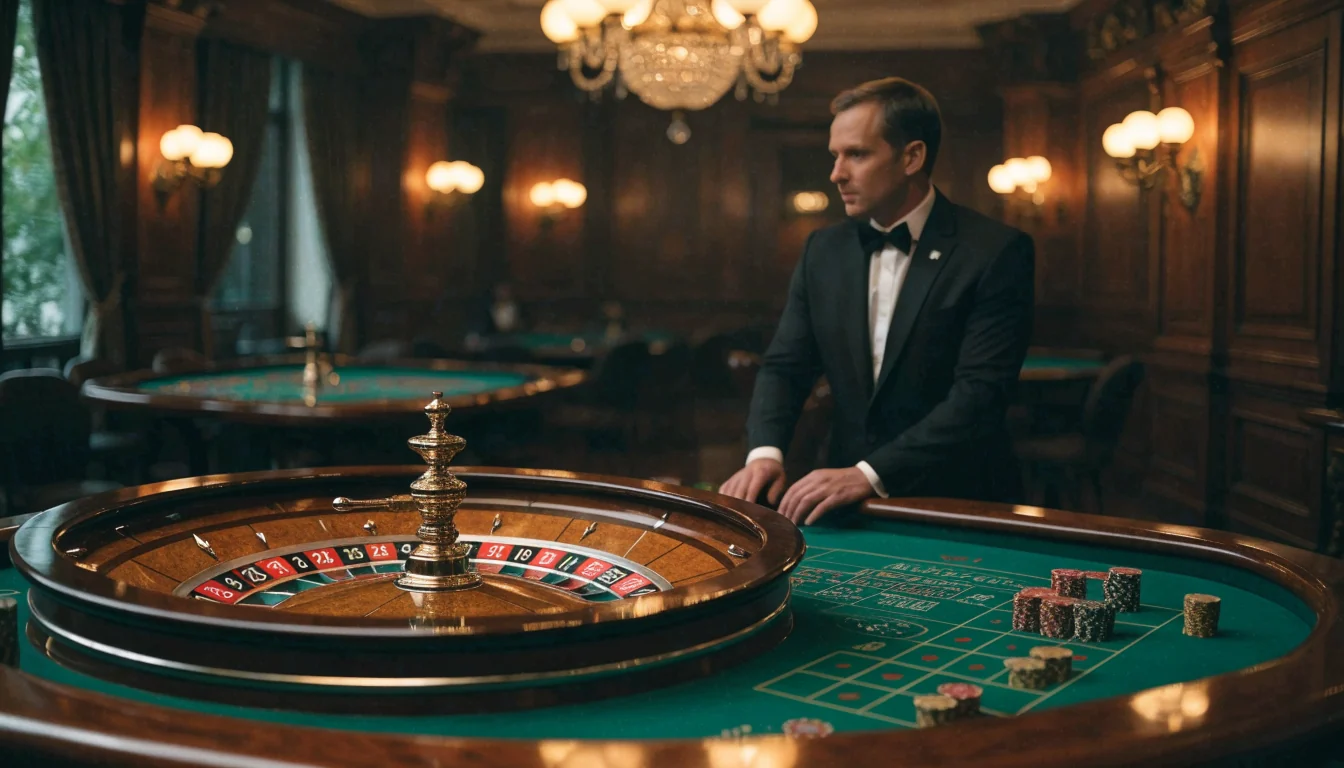
Accepting turns the offer into the result for that game. It removes the uncertainty attached to the two remaining briefcases, but also means the briefcase contents no longer determine the payout. This is the clearest choice when certainty is the priority, though certainty about the amount is not the same as proof that it is the best available result.
Keeping the original briefcase leaves its contents as the prize. Switching instead makes the unopened alternative the prize. Neither action changes what is inside either case; the decision changes which case is selected. Without knowing the amounts inside them, the labels “keep” and “switch” do not establish which will produce the higher result.
A useful definition of perfect play is therefore procedural rather than predictive: identify what each option commits the player to, then choose according to the outcome being valued. A player focused on locking in the offer has a different objective from one willing to leave the result to a briefcase. That distinction is not a strategy capable of forecasting the better amount; it is a way to make the final choice consistent with a stated preference.

The phrase “Deal or No Deal perfect play slot” can suggest a solved route through the endgame. The actual final screen presents alternatives, not a guaranteed winning instruction. Calling a choice perfect after seeing the result confuses a favourable outcome with a decision that could have been known to be superior beforehand. In this round, perfection is a standard for the decision process, not a promise about the prize.
Free Online Play: The Game-Show Decision Behind the Slot
The television format centres on a comparison, not simply on opening briefcases. Contestants consider the Banker’s offer and predict whether the money in the last of the 16 briefcases to be opened will be higher. The decision has a defined reference point: the offer on one side, the final briefcase amount on the other.
Before that prediction, the Banker makes three offers. Each prompts the host to ask, “Deal or No Deal?” The question turns the round into a choice about whether to take the proposed amount or continue towards the reveal. Its tension comes from the uncertainty over what remains unopened, not from a guarantee that continuing will improve the outcome.

A slot based on the show uses a game sequence rather than the television contestant’s prediction as its organising principle. The familiar briefcases and Banker language provide the theme, but the slot’s play is governed by its own stages and choices. Those are related ideas, not identical rules: the show’s central question compares an offer with a predicted final amount, while the online game presents decisions within its programmed round.
Interest in free online play may therefore mean a wish to encounter the show’s format without staking money. The phrase alone does not establish that a particular free version is available. Nor does the television structure confirm how any such version would operate. The reliable distinction is narrower: the original show builds towards a prediction about the last case, while a slot adapts the premise into its own game sequence.
Published by the Muasamthongthai.com team.