Live Casino Lightning Roulette in the UK: How It Works
 Available in GB
The guide covers UK licensing checks, Lightning Roulette’s live interface, table conditions, bet edges, demos and wheel differences.
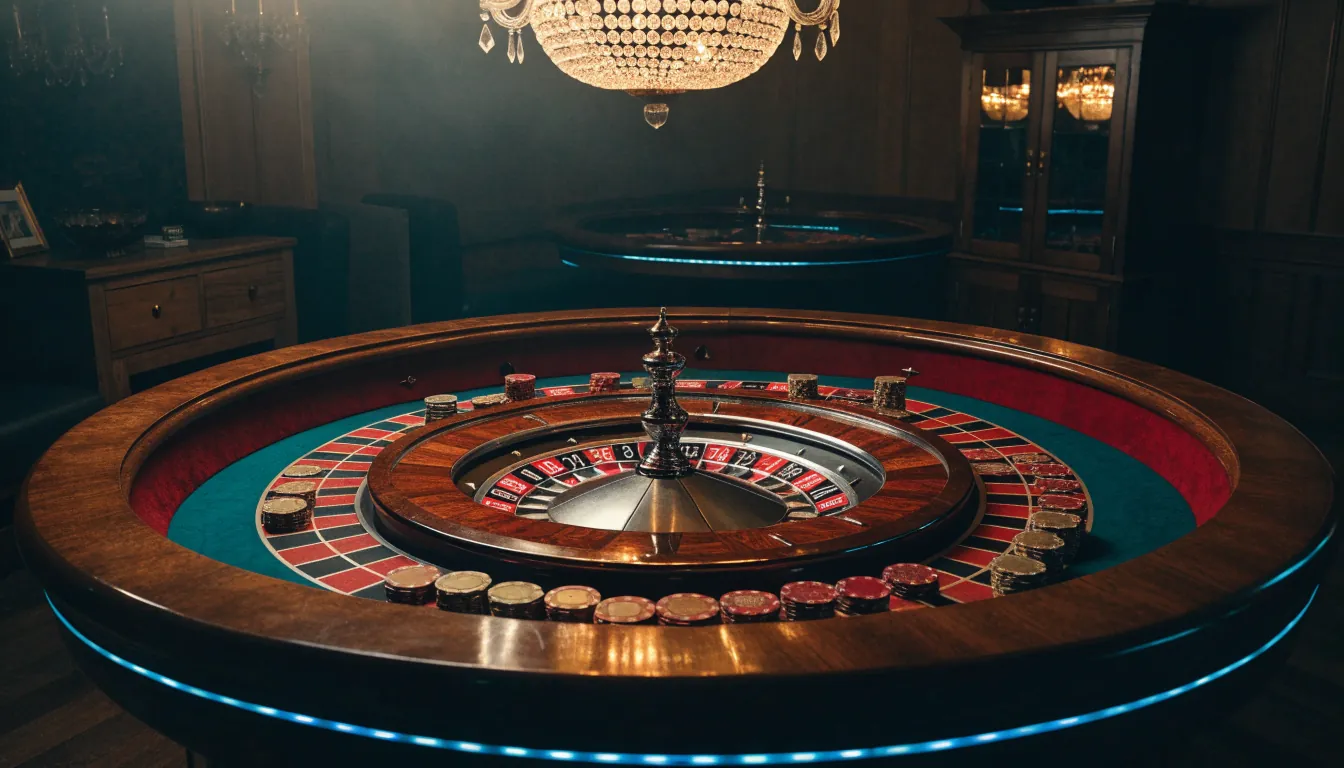
Table of Contents
- Finding Lightning Roulette in a UK Online Casino
- How the Live Lightning Roulette Table Works
- Comparing Casino Terms Before Playing
- First-Person View: What the Interface Shows
- Online Casino Conditions That Affect the Choice
- Roulette Bets and Their House Edge
- What a Demo Can and Cannot Show
- The Dealer, Wheel and Live Table Pace
- Playing Online: Table Limits and Connection Requirements
- European and American Roulette: The Wheel Changes the Odds
Finding Lightning Roulette in a UK Online Casino
Finding Lightning Roulette online involves two separate checks: whether the operator is permitted to serve players in the UK, and whether the game is available in its live casino. A game’s appearance in a lobby does not establish that the operator is licensed to offer it to UK customers. For real-money play, the relevant condition is a current operating licence from the UK Gambling Commission.
The Gambling Act 2005 governs gambling in England, Wales and Scotland. Remote operators offering gambling to customers in Great Britain must hold the relevant Gambling Commission licence, even when the business is based elsewhere. Online gambling is legal in the UK at licensed and regulated sites, and players must be aged 18 or over. These requirements concern the operator’s authority to provide gambling, not the name or presentation of an individual table.
A practical check is to look for the operator’s licensing information and confirm that it identifies the UK Gambling Commission and a current operating licence. The regulator’s register can be used to check licensing details. A reference to a different regulator, or a statement that a casino accepts UK players, is not a substitute for the required UK licence. Offshore operators without a UK Gambling Commission licence sit outside the UK regulatory system; that distinction matters even if their pages display games familiar from licensed casinos.
For UK players considering live casino Lightning Roulette, payout information is one practical detail to check alongside game availability. The entries below reflect only the payout-speed information provided.
Payout speed: 1-3 business days Dieselwin has a stated payout speed of 1–3 business days.
Payout speed: 1-3 business days NightWin has a stated payout speed of 1–3 business days.
Payout speed: 1-3 business days SpinFormula has a stated payout speed of 1–3 business days.
Payout speed: 1-3 business days Revery Play has a stated payout speed of 1–3 business days.
Payout speed: 1-3 business days NightLuck has a stated payout speed of 1–3 business days.
Payout speed: 1-3 business days Amunbet has a stated payout speed of 1–3 business days.
Payout speed: 1-3 business days Zombillion has a stated payout speed of 1–3 business days.
Payout speed: 1-3 business days BeOnBet has a stated payout speed of 1–3 business days.
Payout speed: 1-3 business days EvoSpin has a stated payout speed of 1–3 business days.
Payout speed: 1-3 business days Jetsetspins has a stated payout speed of 1–3 business days.
Once the licensing position is clear, the live casino section is the place to look for Lightning Roulette. The game is not accessed as a separate physical venue: it is presented online as a live dealer game. The operator streams gameplay in real time from a studio where a human dealer is present. Bets are submitted through an on-screen interface, which connects the player’s selections to the live game.
This arrangement has two parts. The studio supplies the live gameplay; the website or app supplies the controls for placing bets. The stream and interface work together, but they are not the same thing. Watching a video feed alone does not place a wager, and interacting with the controls does not turn the game into a purely digital simulation. In the online casino, the live feed is paired with the betting interface so that play can take place remotely.
The wording used in a lobby can vary. A casino may group Lightning Roulette under a live casino heading, show it among roulette games, or make it visible through a search or category feature. Those labels are navigation tools, not evidence about licensing. If the game is not immediately visible, the live-game categories are more relevant than a general slots list; availability can depend on what the operator includes in its own lobby.
The phrase “Lightning Roulette online casino” can describe either the game at a licensed operator or a page that merely advertises it. The distinction is operational, not semantic. The legal test applies to the company accepting real-money play from UK customers. A studio stream may be supplied through a third-party game provider, but that does not remove the operator’s licensing responsibility for offering gambling in the British market.
Account access also has a regulatory boundary. Operators must verify a customer’s age before permitting deposits into a gambling account. The requirement is part of the operator’s controls, rather than a feature of the Lightning Roulette interface. A site that presents the game should therefore be assessed as a gambling service, not treated as an entertainment stream with optional wagering attached.
Before opening a real-money table, the interface should be understood as the point where selections are submitted. The live video shows the studio gameplay; the on-screen controls are used to place bets. That basic division is enough to distinguish live dealer play from watching a recording or using a standalone video. It also means the practical experience depends on both the stream and the operator’s software, though the presence of a live feed does not by itself establish the quality or reliability of either.
A sensible route is therefore straightforward: establish that the operator holds the required UK licence, locate Lightning Roulette within its live casino, and confirm that the displayed game is the live dealer version before making any deposit or wager. Set a budget before playing and keep it fixed. This is entertainment, not gambling advice; the licence establishes the operator’s regulatory status, not a financial outcome for the player.
How the Live Lightning Roulette Table Works
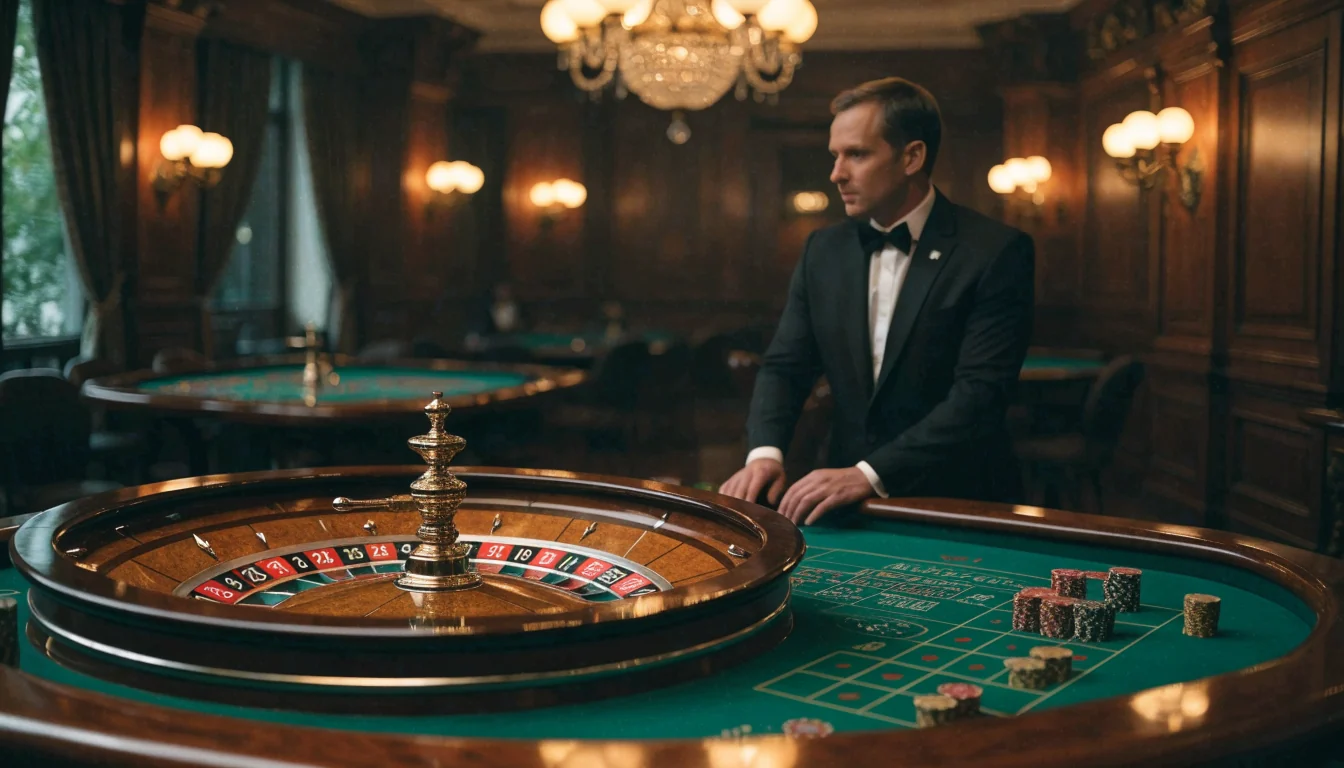
Lightning Roulette combines the familiar roulette outcome with a live dealer format. The central event is the spin of a physical wheel: a dealer sets the wheel in motion, the ball travels around it and eventually settles in a numbered pocket. A bet wins when it identifies the number on which the ball lands. The result is determined by that landing, not by the appearance of the studio or the pace of the broadcast.
That distinction matters because a live table and a computerised roulette game do not produce results in the same way. At a live table, the dealer spins a physical wheel. A computerised version uses a Random Number Generator (RNG) to produce the result. Both formats present a roulette outcome, but the source of that outcome differs: a physical spin in the live game, a random-number system in the digital version.
The word “live” therefore describes more than a visual style. The dealer and wheel are part of the game taking place in real time, while the roulette result still has a simple basis: the ball lands on a number. The selected number has to match that outcome for the bet to win. Seeing the wheel turn does not change this condition, nor does the presence of a human dealer alter what counts as a winning selection.
A useful way to understand the game is to separate its presentation from its result. The live setting gives the round a physical event to watch: the wheel spins and the ball settles. The outcome is then read from the number where the ball stops. The essential question for any roulette bet remains whether the chosen number corresponds to that result. The live format changes how the spin is produced and presented, not the basic relationship between a selected number and a winning outcome.
Lightning Roulette is a named live roulette game, but the word “Lightning” should not be treated as a substitute for checking the specific rules displayed at the table. The central roulette mechanism remains the physical wheel and ball. Any additional game features or conditions would need to be understood from the table’s own rules rather than assumed from its title. That keeps the basic description separate from claims about features that may depend on the particular game presentation.
This is also why the result should not be confused with a prediction. The wheel’s visible movement gives the round a clear sequence, but it does not make the eventual landing known in advance. A player’s selection either matches the number where the ball stops or it does not. The dealer’s role is part of the live event; the winning condition is still defined by the number reached by the ball.
In practical terms, the live roulette outcome can be stated without embellishment: a physical wheel is spun, the ball lands in a numbered pocket, and a bet on that number wins. This is the foundation beneath the Lightning Roulette name. A table’s presentation may make the round feel different from a computer-generated game, but the basic result is not difficult to identify once the wheel has stopped.
A physical wheel is spun by a human dealer in a real-time studio stream.
Results are produced using a Random Number Generator (RNG) system.
For comparison, computerised roulette replaces the physical spin with an RNG. That difference is about how the result is generated, not a different meaning of “winning number”. In either format, the outcome is a roulette number, and a selection must correspond to it to win. The live version makes the wheel and dealer visible parts of the event; the digital version relies on the random-number system instead.
Keeping those points separate makes the table easier to assess. “Live” refers to the dealer-led physical game, while “roulette” describes the number-based outcome. “Lightning Roulette” identifies the particular game being presented, but the basic win condition remains tied to the ball’s landing number. The wheel supplies the result; the selected number determines whether the bet matches it.
Comparing Casino Terms Before Playing
A UK casino offering live dealer games must hold a current operating licence from the UK Gambling Commission. The licence is a threshold condition, not a rating: it establishes that the operator is regulated for the British market, but it does not show whether a particular table or promotion suits a player’s budget. Casino comparisons should therefore begin with the licence and then move to the terms that determine the cost and usability of the offer.
For a Lightning Roulette table, check the conditions attached to the specific game rather than relying on a general description of the casino. Relevant details include the table’s minimum and maximum stakes, the rules shown for that table and whether the stated limits fit the amount set aside for play. These terms can differ between tables at the same operator. A headline offer cannot compensate for limits that do not fit the intended stake.
Bonuses require a separate calculation. A welcome offer may appear substantial while contributing little to live-game wagering requirements, or may not apply to live tables at all. A specialist review reports that many UK welcome offers consist of slot free spins that cannot be used at live tables; this is a reported pattern, not a guarantee about every current promotion. The offer’s own terms establish eligibility.
Where live games count towards wagering, the weighting matters. A specialist review gives 10% as an example of a low live-game contribution. At that weighting, only a small part of qualifying live stakes counts towards the requirement, so the advertised bonus amount alone does not describe how much play may be needed. The exact weighting, eligible games, qualifying stake and any other conditions must be read in the operator’s terms before opting in. If Lightning Roulette is excluded, its contribution is zero, regardless of how prominently the casino displays the promotion.
A useful comparison separates cash value from promotional value. Cash deposited remains the player’s money, subject to the casino’s applicable rules. Bonus funds may carry conditions that restrict eligible games or the ability to withdraw resulting funds. The relevant figure is therefore not the bonus headline but the amount that can actually be used under the stated conditions, and what must be done before any resulting balance becomes withdrawable. If those conditions are unclear, the offer cannot be valued reliably.
- Check minimum and maximum stakes for the specific table
- Review the live-game wagering weightings in the terms
- Treat the session budget as a fixed maximum cost
- Rely on general casino descriptions for table rules
- Use credit cards to fund gambling accounts
- Assume a headline bonus applies to live tables
The table itself and the promotion should not be treated as one package. A casino may provide access to the desired live table while offering a bonus designed for slot play. In that case, the table may still be relevant, but the bonus adds no usable value to that session. Conversely, a promotion that allows live play can still be poor value if the game weighting is low or other restrictions make its requirements impractical.
Before playing, set a fixed budget and treat it as the maximum cost of the session, not as a target to recover. Do not use a credit card to fund gambling. Any comparison of casino terms is for entertainment purposes only, not gambling advice; the arithmetic can clarify an offer, but it cannot make wagering profitable.
First-Person View: What the Interface Shows
“First-person” describes the player-facing presentation, not necessarily a camera placed where a player would sit at a physical table. In a live dealer casino, the screen combines a real-time studio stream featuring a human dealer with an on-screen interface for placing bets. The result is a view of the live game alongside the means to submit a wager; the label alone does not establish a particular camera angle or additional interactive features.
For a first-person Lightning Roulette casino game, the useful distinction is between the streamed image and the betting layer. The stream presents the studio activity, while the interface provides the route for entering bets. They appear together as parts of one online game, but they serve different purposes: one shows the live presentation, and the other handles the player’s selections. Treating the two as separate parts makes the screen easier to assess without assuming that every visual element is a betting control.

The term “first-person” should not be taken as a promise of a special viewpoint. The established live format is a studio stream with a human dealer, paired with an on-screen betting interface. That does not, by itself, confirm a player-seat camera, a choice of camera angles, a close-up view, or direct communication with the dealer. Such details would need to be stated by the particular casino or game interface; they cannot be inferred from the format’s name.
The same distinction applies to Lightning Roulette. The title identifies the game, but it does not explain what controls are available or how the interface arranges them. The dependable description is narrower: a live studio presentation sits alongside a screen through which bets are placed. Any further claim about special controls, visual effects or player interaction should be checked against the actual game rather than read into “first-person”.
When assessing how the screen is presented, the basic practical question is whether the live image and betting interface are both visible and understandable. A stream may show the studio, but that does not make it the control surface; bets are submitted through the on-screen interface. Conversely, the presence of betting controls does not turn the streamed image into a live view from the player’s seat. Keeping those functions distinct avoids confusing presentation with game operation.
This also helps set a reasonable expectation before choosing to play first-person Lightning Roulette. The phrase can describe the player’s screen perspective in a broad sense, but it is not a technical guarantee about the camera or the amount of interaction. The live dealer format establishes a streamed studio and an interface for bets. The exact arrangement on screen belongs to the specific game presentation, not to the wording “first-person” alone.
The “first-person” label describes the player-facing presentation and does not guarantee specific camera angles, a player-seat view, or direct communication with the dealer.
A clear description therefore needs no elaborate claim: the player sees live studio footage and uses an on-screen interface to place bets. The stream and the controls are presented together, but the available format does not justify promising extra viewpoints or features. That is the material distinction when evaluating a first-person Lightning Roulette casino in the UK.
Online Casino Conditions That Affect the Choice
A live table changes the practical cost of a session. Compared with a digital version, live games move more slowly and have higher minimum bets. A stable internet connection is also necessary. These are not decorative details: they affect how long play takes, how much can be committed at the outset and whether the stream can be followed without interruption.
The pace matters when comparing formats. A live dealer game is not designed to deliver the same quick sequence of rounds as a digital game. The slower rhythm gives each round more room, but it also means that a fixed amount of available time may cover fewer rounds. That is a practical difference, not a reason to increase a stake or extend a session. A choice based solely on the game name can overlook the way the table fits a player’s available time.
The minimum bet sets a separate constraint. Higher minimums can make a live table unsuitable for a budget that would be workable in a digital version. The relevant comparison is the lowest permitted stake against the amount set aside for the session. If the minimum makes that budget difficult to maintain, the table is a poor fit regardless of its presentation. A budget should be set before play and treated as a ceiling, not as a target that must be spent.
Connection quality is part of the same assessment. Live play depends on a stable internet connection; an unreliable one can make the format impractical. This is distinct from choosing a faster digital game, because the live table’s real-time stream is central to the experience. No table can make an unstable connection dependable, so the decision should account for the connection available rather than assume interruptions will be harmless.
Taken together, pace, minimum stake and connection form a basic suitability check. The game may be appealing, but the format still needs to fit the time available, the session budget and the conditions under which it will be played. A sensible comparison therefore starts with those constraints, before any preference for a particular live table is treated as a reason to proceed.
For someone weighing a live Lightning Roulette table against a digital alternative, the distinction is operational. Live play takes longer, requires a stable connection and asks for a higher minimum bet. If any one of those conditions conflicts with the planned session, the practical choice is not improved by enthusiasm for the game. There is no financial advantage in choosing a format that does not fit the intended spend or available time.
Attention: Live dealer games move more slowly and typically have higher minimum bets than digital versions, which may affect your session budget and time.
This is entertainment, not gambling advice. The format does not change the need to keep within a pre-set budget. A table’s pace and minimum stake describe the conditions of play; they do not make a session more predictable.
Roulette Bets and Their House Edge
The stated house edge is 2.9% for a straight-up bet and 2.7% for other roulette bets. The gap is 0.2 percentage points. It is a comparison of the theoretical cost built into the bet types, not a prediction of what will happen on a particular spin.
A house edge is best read as a long-run measure across repeated play. It does not mean that a casino deducts that share from each stake, nor does it say whether an individual bet will win. A short run can produce results that differ sharply from the theoretical comparison. The percentages describe relative expected exposure, not a reliable route to a particular outcome.
For stake planning, the distinction is straightforward: the stated edge is marginally higher on a straight-up bet than on other roulette bets. That does not make the latter risk-free or turn the difference into a meaningful guarantee of profit. The edge remains on either category, and the result of an individual wager remains uncertain. A lower stated edge is a smaller theoretical disadvantage, not a promise that the balance will decline more slowly in every session.
Lightning Roulette adds a feature linked to selected numbers, but that should not be confused with the standard edge comparison. In this format, only a straight-up bet on a winning Lightning Number receives the multiplier. The possibility of an enhanced return applies to that qualifying result; it does not establish that every straight-up wager has better value overall. Comparing a potential multiplied payout with the house-edge figures alone would leave out the conditions that determine how the feature operates.
For the same reason, a headline multiplier is not a substitute for checking the table rules and paytable. The stated figures give a basis for comparing the underlying roulette bet categories, while the special feature concerns a particular winning outcome. Those are related parts of the product, but they answer different questions: one describes theoretical house advantage; the other describes when a Lightning Number multiplier can apply.
When assessing the cost of play, the sensible distinction is between a general edge and a specific result. The 2.7% figure is lower than 2.9%, but neither percentage forecasts the next spin or identifies a winning selection. In a Lightning Roulette casino game, the feature may change the return on a qualifying straight-up win; it should not be treated as evidence that the underlying bet has no house advantage. These figures are a way to compare theoretical exposure, not gambling advice.
What a Demo Can and Cannot Show
A Lightning Roulette demo, when offered, can be used to follow the basic sequence of a roulette result without staking real money. The ball lands on a number; a selection wins when it matches that number. This makes free play useful for checking how the game presents its rules and records an outcome before any real-money decision is made.
Demo Mode Limitations
A demo allows players to follow the sequence of a roulette result without real money, but it does not produce withdrawable winnings. A successful demo selection is an illustration of a game outcome, not a financial return.
The value of a demo is limited to that practice. It does not produce real payouts or winnings, and a result shown in free play does not create money that can later be withdrawn. A successful selection in demo mode is an illustration of the game outcome, not a return on a stake. The same distinction applies to a losing result: it does not represent a financial loss.
Free play can help clarify whether the displayed rules and outcome sequence are understandable. It is not a substitute for reading the table rules and paytable before playing for money. Those are the terms that define what a real stake can return. A demo result alone does not establish the value of a bet or predict what a later spin will produce.
Nor should a run of demo outcomes be treated as evidence about future results. Previous spins do not make a number more or less likely to appear next time. A history of results may describe what has already happened; it cannot turn a past outcome into a forecast. That distinction matters particularly where the themed presentation draws attention to selected numbers or changing features: practice results remain practice results.
The phrase “play Lightning Roulette demo” therefore describes a way to observe the roulette outcome without wagering, not a way to test whether a strategy will generate income. Free play cannot reproduce the financial effect of staking money, because no real stake is at risk and no real payout is available. It can also leave the practical decision unchanged: the rules and paytable still need to be reviewed separately before real-money play.
For a UK player, the demo is a familiarisation tool, not a separate source of value. If real play follows, it should be treated as gambling rather than as an extension of practice: set a budget beforehand and keep to it. The game is for entertainment, not financial advice.
The Dealer, Wheel and Live Table Pace
Lightning Roulette in a live dealer casino is built around a physical roulette wheel and a human dealer. That is the central distinction from a computerized roulette game, where a Random Number Generator (RNG) determines the result. The two formats may share a roulette layout, but the process producing each outcome is different.
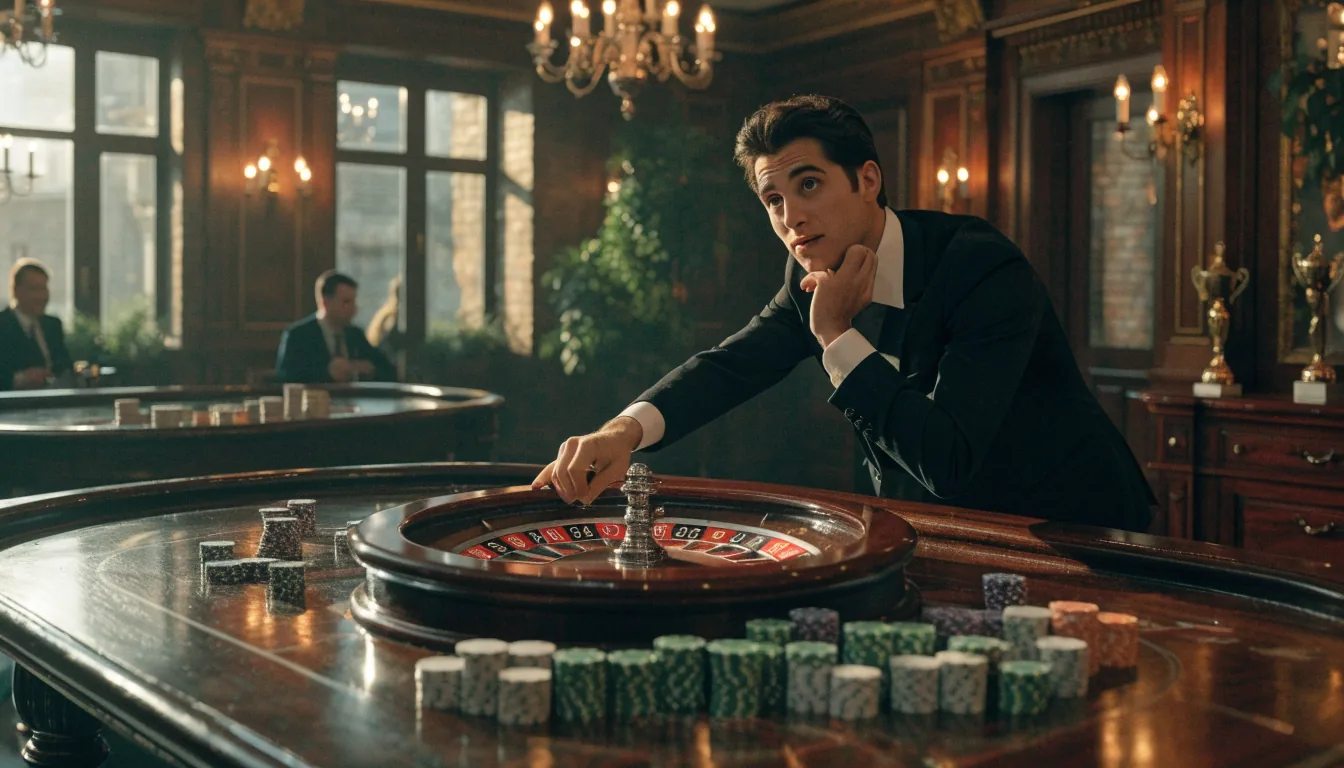
In the live version, the dealer spins the wheel in the studio. The game is streamed in real time, so the wheel and dealer are part of the actual play rather than visual substitutes for a computer-generated result. The online interface remains where bets are placed; the physical wheel is the visible source of the spin.
Computerized roulette does not require a dealer or a physical wheel. Its outcomes are generated by an RNG. This makes the contrast operational, not merely visual: one format presents a live dealer handling a real wheel, while the other uses software to produce results. A live studio setting can make the game feel closer to a casino table, but it does not change the underlying roulette wager or guarantee a different outcome.
The live format also has a different rhythm. A dealer-led game proceeds through the actions at the table, whereas a digital version can move from one result to the next without a physical spin taking place. That distinction matters when comparing the experience, though speed alone does not make either format more favourable. The wheel and the RNG are different mechanisms, not evidence that past results influence what comes next.
- Live play uses a physical wheel and human dealer via a studio stream
- Digital play relies on a Random Number Generator (RNG) for results
- Live games have a slower rhythm compared to the quicker digital pace
- Neither format allows past results to influence future outcomes
For a UK player looking for a Lightning Roulette live dealer casino, the useful distinction is therefore straightforward: live play means a streamed studio game with a human dealer and a physical wheel; computerized play relies on an RNG. The choice is about how the game is conducted and presented, not a basis for predicting results. Live dealer play remains roulette, with the same need to assess the table’s stated conditions before staking money.
Playing Online: Table Limits and Connection Requirements
Playing Lightning Roulette online involves two practical constraints before the first wager: the connection must remain stable, and the table’s minimum stake must fit the planned budget. A live stream and betting interface depend on a reliable internet connection. If the connection drops or becomes unstable, the game may be difficult to follow while the table continues to operate. That makes connection quality part of the playing conditions, not a technical detail to leave until later.
Live dealer games also move more slowly than digital versions. The pace includes the live game’s sequence rather than the quicker rhythm of a computerised game. A slower round does not change the amount at risk on a stake, but it changes how quickly decisions and outcomes arrive. The session budget should therefore be set in advance and treated as a fixed amount, rather than adjusted in response to the game’s pace.
Minimum stakes are another point to check at the table itself. A specialist review has reported starting stakes of around 20p for many live roulette and baccarat tables, while blackjack tables often begin higher. This is a reported figure, not a guarantee that a particular Lightning Roulette table will accept the same entry stake. The displayed table limit is the relevant condition when deciding whether a session fits the budget.

For anyone planning to play Lightning Roulette online in the UK, the practical check is straightforward: confirm that the connection is stable, read the table’s stated minimum and maximum, and review the rules and paytable before placing a bet. A low entry stake does not make repeated betting cost-free; the total exposure depends on the stakes placed over the session. A fixed budget keeps that exposure bounded.
Online live play is entertainment, not gambling advice. The sensible calculation is made before the stream begins: if the table minimum does not fit the set budget, that table is not a suitable option.
European and American Roulette: The Wheel Changes the Odds
The key difference between European and American Roulette is the number of green pockets. European Roulette has a single green zero, marked 0. American Roulette has two: 0 and 00. The additional pocket changes the odds attached to a spin, even when the chosen number is otherwise the same.
The stated chance of winning is 1 in 37 on a European wheel and 1 in 38 on an American wheel. That difference comes from the number of possible pockets: American Roulette has one more outcome in the wheel’s layout. A number bet therefore has a slightly lower chance of landing on its selection on the American version.
For an online Lightning Roulette casino game, the variant matters before any special feature is considered. The wheel layout establishes the underlying odds; a Lightning label does not make the extra American pocket disappear. The table’s displayed rules should identify which version is being offered, since the name alone does not settle the layout.
This comparison concerns the chance of a selected number winning, not the size of a payout or the value of a particular stake. Those are separate parts of the table terms. A useful check is straightforward: one green pocket means the European layout and odds of 1 in 37; two green pockets, 0 and 00, mean the American layout and odds of 1 in 38. The distinction is small in appearance, but it is an additional possible outcome on every spin.
Created by the ”Muasamthongthai.com” editorial team.