Casinos That Accept EntroPay in the UK: What to Check
 Available in GB
A casino’s cashier shows which payment methods are currently available for the account and transaction being considered.
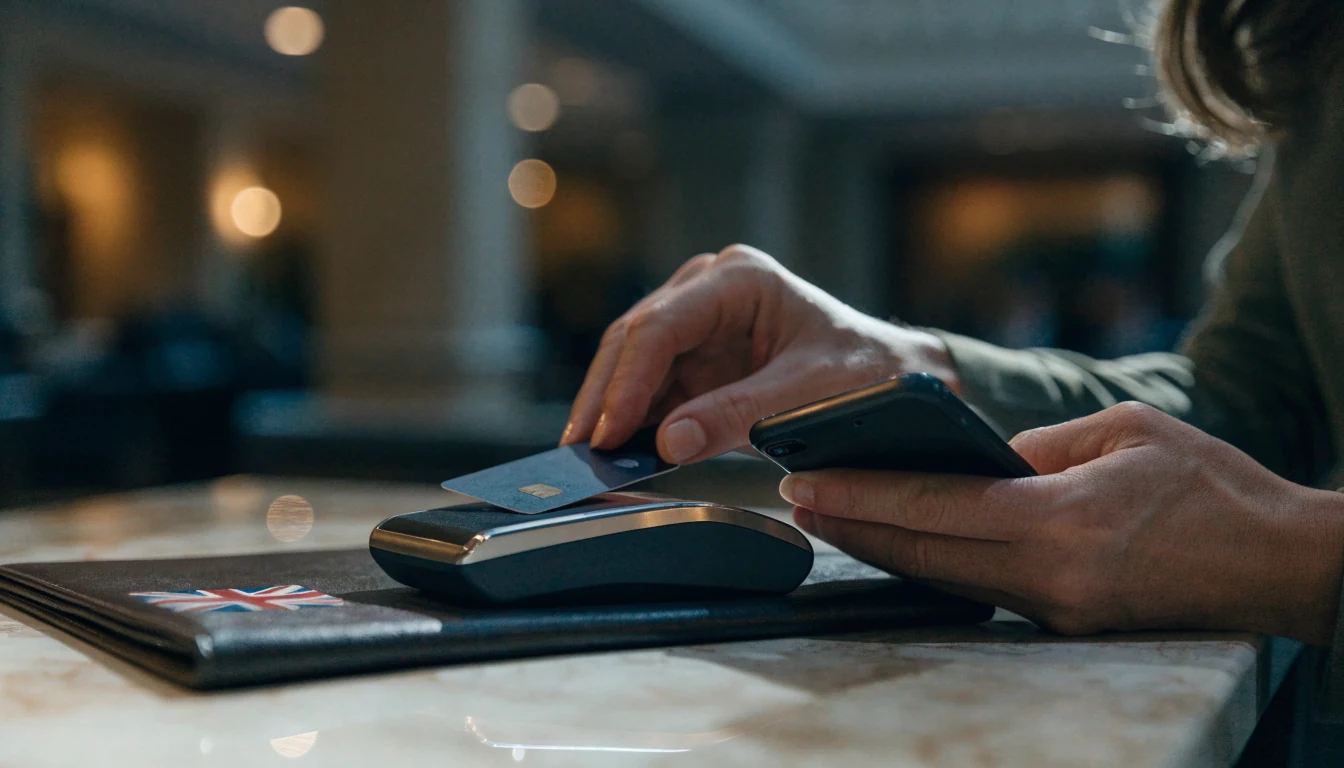
Table of Contents
- Check the Cashier Before Treating EntroPay as an Option
- What a 2026 EntroPay Casino Claim Needs to Prove
- Assessing Casino Payment Fit Without a Verified EntroPay List
- Why No EntroPay Casino List Can Be Confirmed Here
- Payment Routes and Ownership Checks
- EntroPay Searches and the UK Card Rules
- Alternative Payment Methods to Compare in the Cashier
- Confirm the Minimum Deposit Before Paying
- Deposit Limits, Eligibility and Account Controls
- Withdrawals, Original-Source Returns and Verification
Check the Cashier Before Treating EntroPay as an Option
A payment method should not be treated as available because it appears in a casino’s general payment information. The practical check is the cashier for the relevant account: that is where the site displays the methods it currently offers for the transaction being considered. A logo on a promotional page, an old review or a broad payment-method list may describe a different arrangement from the one available to a UK customer now.
This matters when assessing an EntroPay casino claim. The fact that a payment service is technically compatible with online transactions does not establish that a particular casino accepts it. Compatibility describes what a method can do in principle; acceptance describes what the casino makes available to its customers. Those are separate conditions, and only the second answers whether EntroPay can be selected at a particular site.
General payment pages can still be useful as an initial indication, but they are not a substitute for the cashier. They may be written for more than one market, may not distinguish between deposits and withdrawals, or may remain online after a payment option has changed. A list can also name a card brand without specifying which card products are eligible. A specialist casino review, for instance, lists Visa and Mastercard among the methods discussed, but that information alone does not establish current UK availability or whether a particular card product will work. The cashier remains the relevant check.
If you are considering casinos in connection with Entropay in the UK in 2026, check the payment options available to you before choosing. The details below provide one specific point of comparison: stated payout speed.
Payout speed: 1-3 business days Dieselwin lists a payout speed of 1–3 business days.
Payout speed: 1-3 business days NightWin lists a payout speed of 1–3 business days.
Payout speed: 1-3 business days SpinFormula lists a payout speed of 1–3 business days.
Payout speed: 1-3 business days Revery Play lists a payout speed of 1–3 business days.
Payout speed: 1-3 business days NightLuck lists a payout speed of 1–3 business days.
Payout speed: 1-3 business days Amunbet lists a payout speed of 1–3 business days.
Payout speed: 1-3 business days Zombillion lists a payout speed of 1–3 business days.
Payout speed: 1-3 business days BeOnBet lists a payout speed of 1–3 business days.
Payout speed: 1-3 business days EvoSpin lists a payout speed of 1–3 business days.
Payout speed: 1-3 business days Jetsetspins lists a payout speed of 1–3 business days.
What the cashier can establish
The cashier shows whether a named option is presented for the account and transaction in question. If EntroPay is absent, a general claim elsewhere on the site does not make it selectable. If it appears, that is a more direct indication of availability, but the displayed terms still matter: the option may relate only to a particular transaction type or be subject to conditions shown by the casino.
The distinction is important because a payment method can be mentioned in one context without being available for every use. A page may discuss deposits while saying nothing about withdrawals, or describe a method without confirming that it is currently enabled. The cashier’s options and accompanying conditions should therefore be read together, not treated as interchangeable evidence.
There is also a difference between a casino accepting a payment brand and accepting every product issued under that brand. A general list of Visa or Mastercard does not settle eligibility for a specific card. That is why even familiar payment labels need to be checked against the current cashier details. The same logic applies to a less commonly listed method: a name in general information does not establish that the account can use it.
Avoiding the compatibility shortcut
A common mistake is to reason from the payment provider outward: if a service can process online payments, then a casino that accepts online payments must support it. That conclusion skips the casino’s own decision about which providers and transaction routes it enables. A method may be technically capable of handling a payment while remaining unavailable at a particular operator.

The reverse shortcut is also unreliable. A casino’s mention of a payment service somewhere on its site does not necessarily mean that every customer can use it. Availability may depend on the market or the transaction being made. The useful question is not whether EntroPay can function as an online payment method in general, but whether it is actually offered in the relevant casino cashier under the relevant account conditions.
This is why claims about online casino sites that accept EntroPay in the UK should not be inferred from generic payment lists. A page can supply a lead, but the cashier is where that lead can be checked. Until the option is visible there, treating the method as an available way to fund an account is premature.
A practical reading of payment information
Payment pages and reviews are best read as descriptions that need confirmation, not as a live record of every cashier. The wording should be specific enough to distinguish a current option from a general mention. If a page names EntroPay but the cashier does not, the cashier is the more relevant indication of what the account can use. If the cashier does show it, the terms beside the option determine the scope of that availability.
- Check the cashier for the relevant account
- Read cashier options and conditions together
- Verify availability for the specific transaction type
- Rely on general payment information pages
- Assume compatibility equals acceptance
- Trust logos on promotional pages or old reviews
This approach avoids turning a compatibility assumption into a recommendation. It also prevents a broad payment list from being mistaken for evidence that a named casino currently takes EntroPay. The method’s presence in a list, its ability to process online transactions and its actual availability in a UK-facing casino cashier are three different things.
For anyone comparing an EntroPay online casino option, the first useful step is therefore modest: inspect the cashier rather than relying on a logo or a general page. That check does not, by itself, establish every detail of a payment claim. It does establish whether the method is presented as an available option at the point where the casino handles payments.
What a 2026 EntroPay Casino Claim Needs to Prove
A claim that a UK-facing casino accepts EntroPay needs to establish more than historical use, a payment logo, or a general statement that the site supports e-wallets. It needs to show that EntroPay is available to the relevant customer now and that the casino’s terms permit it for the transaction in question. Without both points, “accepted” is too broad to guide a payment decision.
The first piece of evidence is a live cashier entry. The method should appear as a selectable option in the account’s payment area, rather than only in an old review, a promotional page, or an image with no date. A payment brand can remain visible on a general information page after the cashier options have changed. That page may describe past or conditional availability; it does not establish that a deposit can be made through the method at present.
The account context matters. A cashier can display options that depend on the customer’s location, account status, or other details. Evidence from a different market or a different account therefore cannot automatically establish availability for a UK customer. A casino name beside an EntroPay logo is not enough if the actual UK account cannot select it.
The terms must match the intended transaction
A payment method may be available for one part of the account’s money flow but not another. The casino’s payment terms should state whether EntroPay is permitted for the intended transaction, and whether any conditions apply. A deposit option does not, by itself, prove that the same route can be used for withdrawals. Nor does a general mention of EntroPay establish that every account or transaction is eligible.

The wording in the terms should be read alongside the cashier entry. If the cashier offers EntroPay but the terms restrict its use, the restriction affects the claim. If the terms list EntroPay but it does not appear as a selectable cashier option, the terms alone do not prove that the method is currently available to that account. The two records answer different questions: the cashier shows what can be selected; the terms define the permitted use.
A sound claim therefore needs a clear scope. It should identify whether it means deposits, withdrawals, or both, and whether availability is being described for UK customers rather than for an unspecified market. “Accepts EntroPay” can otherwise conceal a material distinction between a method being mentioned, being available to deposit, and being available for the full transaction intended.
Currency is a separate condition
Currency support is not proof of payment-method support. A specialist review has reported that GBP is supported, but the account currency still needs to be checked before the first transaction to avoid conversion. That statement does not establish that EntroPay is offered in the cashier, or that it can be used for a particular transaction.
The distinction is practical. A payment method, the casino account currency, and the currency handled by a payment provider are separate elements. A claim about one does not settle the others. If the account is set to a currency other than GBP, conversion may affect the amount credited or debited. The displayed account currency should therefore be treated as part of the evidence, not inferred from the casino’s UK-facing presentation.
What counts as a current claim
For a claim dated 2026, the evidence should be contemporaneous with that claim. An undated list or a review written for another period may be useful as a lead, but it cannot establish current availability without confirmation in the casino’s own cashier and applicable terms. Payment arrangements can change; a statement that was accurate at one point does not become current merely because it remains online.

The strongest basis is consistent information from the account cashier and the relevant payment terms, with the intended transaction stated plainly. Any mismatch reduces the claim’s value. A logo without a selectable option proves little; a cashier option without clear terms leaves the permitted use uncertain; and currency information alone answers neither question.
This standard avoids treating a casino as an EntroPay option on the strength of an ambiguous label. It also avoids turning a limited observation into a universal promise. Availability should be described only as far as the evidence reaches: for the account, market, and transaction that have actually been confirmed.
Assessing Casino Payment Fit Without a Verified EntroPay List
A payment method’s name is only one part of its fit. The relevant comparison is between the options displayed for the account, the account’s currency and the cost of moving the intended amount. A method can appear attractive in general while producing a poor result once fees or conversion are included. That calculation does not establish that any particular casino accepts EntroPay.
Start with the account currency shown by the casino. If the account is held in pounds sterling and the payment is also made in pounds, there may be no casino-side currency conversion. If the currencies differ, the amount credited may not match the amount debited from the payment account. The difference can arise from an exchange rate or conversion spread, as well as any separately stated fee. The displayed deposit amount alone is therefore not necessarily the full cost.
The comparison should use the same intended transaction amount for each available route. A fixed charge has a different effect on a small transaction than on a larger one; a percentage-based charge changes with the amount. If the provider’s exchange rate is less favourable than the market rate, the conversion spread is another cost even when no separate conversion fee is shown. A visible flat fee is easy to identify, but it is not the whole calculation.
A specialist review has noted that there is no universally lowest-fee payment method: casino charges, provider fees, currency conversion and network costs can all affect the total. That is a point to apply to the specific payment route and amount, not a basis for declaring one method cheapest across casinos. Where the available fee information is incomplete, the comparison is incomplete too.

A useful comparison records the amount intended to leave the payment account, the currency in which it is charged, the amount the casino will credit and every disclosed fee. The difference between the first and last figures is the practical cost, provided they are expressed in the same currency. If conversion occurs, the exchange rate or spread should be included rather than treating the conversion as cost-free.
The cashier’s payment options are also account-specific information, not a general promise attached to a casino brand. Payment arrangements can differ across sites, and a method described on a broad information page may not be available for a particular account or transaction. For judging fit, the cashier options that can actually be selected matter more than a list copied from an older review. This is a comparison principle; it does not establish that EntroPay is present at any named site.
Keep the criteria separate. Availability answers whether a method is offered in the relevant account. Currency answers whether the casino balance and payment are denominated alike. Cost answers what is lost to casino charges, provider fees, conversion spread or network costs. Combining these into a single label such as “good payment choice” conceals which condition is doing the work.
The same discipline applies when assessing claims about EntroPay deposits. A site should not be treated as a suitable EntroPay option merely because another payment method is listed, because the site accepts payments generally, or because a third-party description uses broad wording. Those details do not establish EntroPay compatibility. Nor does a familiar brand name settle the cost of a transaction: the account currency and charges still determine the financial result.
A comparison table can make the decision auditable without turning it into a ranking:
| Factor | What to record |
|---|---|
| Payment option | The method shown as available for the account |
| Account currency | The currency in which the casino balance is held |
| Payment currency | The currency charged by the payment provider |
| Amount credited | The amount the casino states will reach the account |
| Costs | Casino, provider, conversion and network charges |
If a field cannot be confirmed, it should remain unresolved rather than be filled with an assumed figure. Payment fit is not a score that can be inferred from a casino’s general reputation. It is the result of matching an available route to the account currency and calculating its costs for the transaction in question.
Why No EntroPay Casino List Can Be Confirmed Here
A list of UK casinos accepting EntroPay would need to identify named operators whose current payment options include the method. No individual casino can be presented here as meeting that condition. A “best” list would go further: it would imply that each named site accepts EntroPay and that the options have been compared on a common basis. Without confirmed entries, that would give a ranking the appearance of evidence without establishing its starting point.
The distinction matters because a casino’s general payment information is not the same as confirmation that EntroPay is available to a UK customer. Payment arrangements can be specific to a market, account or transaction type. A name appearing in an old article, a search result or a broad list of payment brands does not, by itself, establish current acceptance. Nor does a casino’s general availability in the UK establish that this particular payment route can be used there.
Treating uncertainty as a positive listing would turn a payment possibility into an endorsement.
For that reason, no operator names are attached to an EntroPay recommendation or ranking. This is not a claim that no UK casino accepts the method. It is a narrower statement: a current list of named casinos cannot be set out as fact here. Treating uncertainty as a positive listing would turn a payment possibility into an endorsement, and those are different claims.
The same limit applies to lists of casinos said to accept EntroPay deposits. The word “deposit” does not make a claim complete. A payment method might be presented differently across a site’s pages, and availability for one transaction does not automatically establish its availability for another. A list that names casinos without establishing what the method can actually be used for risks answering a broader question than its evidence supports.
“Best” also needs a comparison set. If the eligible casinos are not established, there is no defensible group to rank. A list cannot become reliable merely by adding labels such as “top choice” or “recommended”; those labels do not verify acceptance. The result would be a set of names, not a substantiated EntroPay casino list.
This restraint is specific to EntroPay. It does not mean that UK casinos lack payment options or that a casino with other methods should be treated as unsuitable. It means only that those other options cannot be used to infer EntroPay acceptance. A site’s presence in a UK casino directory, for instance, is not evidence for this particular payment claim.
A responsible directory would separate confirmed acceptance from general casino coverage and would not place a casino in an EntroPay category on association alone. Until a named site can be identified as accepting the method for the relevant UK transaction, presenting it as an EntroPay casino would overstate what is known.
Payment Routes and Ownership Checks
A payment method is not just a button in a cashier. The account behind it has an owner, and that owner should match the customer named on the casino account. When those details belong to the same person, basic ownership checks are less likely to create avoidable friction around a transaction.

The practical standard is consistency: one named customer account, paired with a payment route held by that same customer. A deposit made through another person’s account introduces a mismatch between the casino’s customer record and the source of funds. Even where the payment route appears in the cashier, its availability does not resolve that ownership issue.
The same principle applies when considering EntroPay as a possible casino payment route. A casino’s payment terms and the cashier determine whether the method can be used; the account details determine whether the transaction fits the customer’s own account. These are separate checks. Seeing a method listed would not, by itself, establish that a payment from someone else’s account is suitable.
Consistency also matters across transactions. The cleanest arrangement is often one named account used for both depositing and withdrawing, rather than a sequence of routes held by different people or under different names. This keeps the ownership trail straightforward. Switching accounts can make the transaction harder to reconcile, even if each route is otherwise available.
That does not mean every change of payment route will cause a problem. It means that each route should be assessed against the same basic question: does the payment account belong to the person named on the casino account? If the answer is unclear, the uncertainty exists before any amount is sent. A payment option being displayed is not a substitute for matching ownership details.
A useful distinction is between method availability and account fit. Availability concerns whether the casino offers a route for the intended transaction. Account fit concerns whether the route belongs to the casino customer. Neither check replaces the other, and passing one does not imply the other has been satisfied.

For a payment setup, the least complicated pattern is therefore a casino account in the customer’s own name and a payment account in that same name, used consistently. Where the names or account holders differ, the potential friction is not a matter of speed or convenience; it arises from the ownership record itself. A clean match removes that avoidable uncertainty without making any claim about whether a particular casino currently accepts EntroPay.
EntroPay Searches and the UK Card Rules
Interest in EntroPay at UK casinos sits alongside a broader distinction in payment rules: debit-card payments remain a common option, while credit-card payments for gambling are prohibited at UK-licensed casinos. Those are separate points. The presence of familiar card brands in a casino’s payment information does not establish that EntroPay is accepted, nor does it establish that every product carrying a card logo is eligible.
UK casinos commonly accept debit cards, including Visa and Mastercard. That availability can make a card-based payment route seem like a close match for an EntroPay-related request, but the category is not enough to confirm compatibility. A payment method’s name, a card logo or a general reference to cards cannot settle whether a particular EntroPay transaction is supported. That is a cashier-specific question, not a consequence of debit cards being widely used.
The other boundary is firmer. On 14 April 2020, the regulator introduced a ban on credit-card gambling, and the rule has not been relaxed. A UK-licensed casino cannot accept a credit-card payment for gambling. The restriction concerns the source of the funds, not merely the label displayed beside a payment option. Routing credit-card funds through an intermediary does not make them acceptable for gambling.
This distinction matters when interpreting a casino’s card options. A debit-card route and a credit-card route are not interchangeable for regulatory purposes, even if both are described casually as card payments. The casino must be able to identify and process an eligible payment type; a customer cannot treat the word “card” as proof that the transaction falls on the permitted side of the rule.
UK-licensed casinos are prohibited from accepting credit-card payments for gambling, regardless of the label used.
The EntroPay name therefore should not be used as a shortcut for deciding whether a payment is a debit-card deposit, a credit-card payment or another kind of route. The UK card rule explains what licensed casinos cannot accept; it does not establish that EntroPay itself is offered. For an EntroPay casino in the UK, the relevant conclusion is limited: ordinary debit-card availability is not evidence of EntroPay acceptance, and credit-card gambling remains outside the permitted options.
Alternative Payment Methods to Compare in the Cashier
EntroPay is not the only payment label worth checking. A UK-facing cashier may show several alternatives, but their presence does not establish that every method supports both deposits and withdrawals. The transaction rules and any promotion conditions need to be read against the specific option selected.
PayPal is valued in specialist reviews for speed and convenience. One specialist review also notes that PayPal may be excluded from bonus eligibility; that is a promotion-specific condition, not a rule that can be applied across casinos. The bonus terms should state whether a PayPal deposit qualifies before the offer is treated as part of the payment’s value.
Open banking and bank transfers are another route. A specialist review reports that these can support instant deposits and fast withdrawals at many sites. Those timings are not a fixed promise for every casino or transaction: the cashier and the operator’s payment terms determine what applies. A bank-transfer option should therefore be assessed on the stated transaction route, rather than on the general label alone.
Paysafecard has a narrower function. It is a prepaid voucher for deposits, so it should be treated as deposit-only rather than as a complete deposit-and-withdrawal route. That distinction matters when comparing payment options: a method that can fund an account may still leave payouts to be handled through another eligible route.

Skrill and Neteller are offered at some sites. They may also be excluded from promotions, so the relevant bonus terms need checking before a deposit is made. Apple Pay is another possible deposit option at some UKGC-licensed casinos; its availability at a particular cashier should not be assumed from the method’s presence elsewhere.
The useful comparison is therefore functional, not a league table of brand names. For each cashier option, establish whether it is available for the intended transaction, whether the promotion terms treat it as eligible, and whether it can cover the full payment route required. PayPal, bank transfer, Paysafecard and e-wallets do not perform interchangeable roles. A deposit-only voucher, for instance, cannot be compared with a route that the operator also permits for withdrawals. The cashier’s displayed options and the operator’s terms set the actual boundary.
Confirm the Minimum Deposit Before Paying
A casino’s advertised starting deposit is not a universal entry price. The minimum can depend on the payment method selected, so a figure shown for one route should not be assumed to apply to another. For a deposit intended through EntroPay, the relevant amount would be the minimum displayed for that method at the point of payment, if it is offered.
A specialist review gives a starting range of £10–£20, but that is an indicative range, not a fixed UK-wide rule. The cashier’s amount for the selected method is the figure that determines whether a particular deposit can be submitted. A lower minimum shown beside a different method does not establish the minimum for EntroPay.
The distinction matters when a balance is being planned. If the intended deposit is below the displayed minimum, the transaction may not proceed; increasing it to meet that threshold changes the amount committed, not merely the payment label. The method-specific minimum should therefore be treated as part of the transaction terms before payment is confirmed.
This check concerns the entry amount only. It does not establish the maximum that can be deposited, nor does it say anything about account-level deposit controls. Those are separate conditions and should not be inferred from the minimum shown in the cashier.
Deposit Limits, Eligibility and Account Controls
A payment method does not necessarily carry the same deposit ceiling for every account. A specialist review reports that operators may set different maximums for a single transaction, a day or a month, with the applicable ceiling depending both on the chosen route and on account status. Those are separate checks: a payment option may be available while its permitted amount is lower than the account’s overall allowance.
For anyone assessing whether a casino’s payment setup suits regular use, the relevant figures are the limits shown for the selected method and the account-level controls. A displayed maximum is not a promise that every attempted deposit will be accepted; eligibility and account status can affect the amount permitted. The cashier and account settings are the places to establish the current position, rather than relying on a general description of a payment method.
There is also a separate UK requirement concerning financial limits. Before a new customer can make a first deposit, the remote gambling operator must present a prompt to set a financial limit. Account-level limit controls must remain accessible, so the setting is not confined to the initial registration step. This makes the limit a continuing account control, not simply a payment-method ceiling.
These controls answer different questions. A method-specific maximum governs how much may be deposited through that route, while an account limit records a customer’s own chosen restriction. Neither should be treated as interchangeable with the other. A payment route can have room for a larger transaction than the account’s chosen limit, or an account allowance can exceed the ceiling attached to a particular method. The effective amount is the one permitted after both controls are applied.
Withdrawals, Original-Source Returns and Verification
A casino withdrawal is not necessarily sent by whichever route appears fastest in the cashier. UK anti-money-laundering controls commonly require winnings to be returned to the original payment source. This closed-loop approach means a deposit method and a payout method cannot always be treated as interchangeable.
For a search about withdrawing from an EntroPay casino, the first condition is that EntroPay was actually available and used for the deposit. That does not establish that it can receive a withdrawal. The casino’s payment terms determine how the original-source rule is applied and what happens if that route cannot process a payout. An alternative route may be considered, but additional checks can be required.
The balance shown in an account is also not the same as a completed payment. A specialist review notes that withdrawal processing includes the casino’s internal approval and that a first payout may take longer while verification is completed. The relevant sequence is therefore approval, any outstanding KYC checks, and payment-provider processing. A displayed processing estimate should not be read as a guaranteed arrival time.
Verification can involve confirming identity and checking that the withdrawal request follows the casino’s payment terms. If documents or transaction details are still being reviewed, the casino’s approval stage may remain incomplete. That can delay the payout even where the requested amount is available for withdrawal.
Before relying on an EntroPay route for a payout, the terms should state whether withdrawals to that method are supported and how an unavailable original source is handled. The practical outcome depends on the route used for the deposit, the account’s verification status and the casino’s approval process. A deposit being accepted does not, by itself, settle the withdrawal route or timing.
Why must withdrawals return to the deposit method?
Returning funds to the original payment source is a common anti-fraud and anti-money-laundering control. An alternative route may require additional verification.
What is the fastest withdrawal method for UK casinos?
PayPal, open banking services and debit cards linked to fast payout systems are generally among the quickest options. The casino’s approval process and your verification status also affect how quickly you receive the funds.
Are Visa and Mastercard deposits definitely debit cards?
No. Visa and Mastercard are card brands, and a general listing does not confirm that every card product is eligible. Check the casino cashier for the current options and terms.
Which method has the lowest fees?
There is no universally lowest-fee method. Compare casino and provider charges, any bank or issuer fees, currency conversion spread and network costs for your transaction.
Is Skrill available?
Yes, Skrill is available at some UK-friendly casino sites. It may be excluded from promotions, so check the casino’s terms.
Do UK casino withdrawals require verification?
Verification may be needed, and first withdrawals can take longer while it is completed. Having a fully verified account can also affect payout speed.
Why can a fast payout casino still delay my withdrawal?
A fast payment method does not bypass the casino’s internal approval process. Verification, particularly on a first withdrawal, can also add time.
Prepared by the Muasamthongthai.com editorial staff.