
Live Blackjack Online Casinos in the UK: Table Guide
 Available in GB
A practical guide to live blackjack table terms, rules, features and bonus weighting, from placing bets to understanding a winning hand.

Table of Contents
- What Makes a Live Blackjack Table Different
- Choosing a Blackjack Table by Its Actual Terms
- Blackjack Sites and UK Licensing
- How Blackjack Works—and What a Winning Hand Means
- Live Blackjack Features: Chat, Side Bets and Bet-Behind
- Blackjack Rules at the Table
- How to Play a Live Blackjack Hand
- Blackjack Bonuses: Check the Weighting Before Counting the Value
What Makes a Live Blackjack Table Different
A live blackjack table puts a real dealer and a real-time video stream at the centre of the game. The dealer is not an animated figure generated by the game software: the cards are physical, and the action is broadcast from a studio as it happens. Bets, by contrast, are placed through the casino’s on-screen interface. The result is a format that combines a filmed table with digital controls.
That combination is the main distinction from a digital blackjack game. In a digital version, the game is presented through software rather than a video feed of a human dealer handling physical cards. In a live game, the cards can be seen on screen as the dealer deals them, while the interface provides the means to participate remotely. The screen therefore serves two purposes: it shows the table and records the player’s selections.
The stream is live rather than a sequence of prerecorded scenes. The dealer’s actions and the displayed game unfold in real time, so the screen reflects the table as it is being run. This gives the format a visible human presence that a software-only game does not provide. It also means the pace is linked to a real dealer and a live table, rather than being determined solely by the speed at which a digital interface can accept another action.
Choosing a live blackjack casino involves more than finding a table; it also helps to check what is known about withdrawals. This list provides a concise reference for UK players, including the stated payout speed for each operator.
Payout speed: 1-3 business days Dieselwin’s stated payout speed is 1–3 business days.
Payout speed: 1-3 business days NightWin’s stated payout speed is 1–3 business days.
Payout speed: 1-3 business days SpinFormula’s stated payout speed is 1–3 business days.
Payout speed: 1-3 business days Revery Play’s stated payout speed is 1–3 business days.
Payout speed: 1-3 business days NightLuck’s stated payout speed is 1–3 business days.
Payout speed: 1-3 business days Amunbet’s stated payout speed is 1–3 business days.
Payout speed: 1-3 business days Zombillion’s stated payout speed is 1–3 business days.
Payout speed: 1-3 business days BeOnBet’s stated payout speed is 1–3 business days.
Payout speed: 1-3 business days EvoSpin’s stated payout speed is 1–3 business days.
Payout speed: 1-3 business days Jetsetspins’ stated payout speed is 1–3 business days.
For a player, the distinction is less about a different name for blackjack than about how the game is delivered. The familiar game appears within a studio stream, but participation remains digital: the dealer handles cards at the table, while bets are made on screen. It is neither a conventional in-person table nor a wholly automated game. The physical and online elements operate together, with the stream showing the former and the interface handling the latter.
This division matters when judging what the experience can and cannot offer. A live dealer makes the table visible, but does not turn an online session into an in-person one. The view is still mediated by a screen, and participation still depends on the interface. Conversely, the presence of an interface does not mean the cards are being dealt by a digital animation. The physical cards and human dealer are part of the live broadcast; the online controls are the route through which a remote player joins in.
A live dealer blackjack casino may therefore feel more like watching a table in operation than watching a game render its next move. That is a description of presentation, not a claim that the game has different outcomes or more favourable terms. The stream changes how the table is shown. It does not, by itself, establish the quality of a particular table, its conditions, or the value of taking part. Those are separate considerations.

The real-time format also changes the rhythm. Live games run more slowly than digital versions. A human dealer has to carry out the visible activity at the table, so the round does not move at the same pace as a software-driven interface. That slower tempo is part of the format, not a technical fault. It can make the game easier to follow as a sequence of live events, but it also means fewer opportunities to move through play in the time available than with a faster digital version.
This difference is worth treating as a practical cost of the format. Time is part of the experience: a live stream requires attention while the table proceeds, whereas a digital game is not organised around a filmed human dealer. A player comparing the two should account for pace as well as presentation. Choosing the live version for its human presence also means accepting the cadence that comes with a real dealer.
The stream depends on a stable internet connection. If the connection is unreliable, the video and the on-screen controls may not remain in step from the player’s perspective. A live table cannot be reduced to a set of static images without losing the feature that defines it: the dealer and physical cards unfolding in real time. Connection quality is therefore part of the basic suitability of the format, not an optional refinement.
Attention: A live blackjack stream requires a stable internet connection to ensure the video and on-screen controls remain in step.
This is different from simply preferring a larger or smaller screen. The key requirement is continuity: the stream must be viewable while the interface is being used. A connection that repeatedly interrupts the picture makes it harder to follow the table as it happens. The live format is consequently less forgiving of unstable access than a game that does not rely on an ongoing video feed.
The financial terms can differ too. Live games have higher minimum bets than digital versions, so the starting point for participation may be less accessible. That is a format-level distinction, not a guarantee about every individual table. The actual amount depends on the table’s stated terms, which need to be considered separately from the presence of a dealer or the quality of the stream. A more immersive presentation does not make a higher minimum bet less consequential.
In practical terms, live blackjack suits a preference for seeing a human dealer handle physical cards and for following a game as it unfolds on camera. The trade-off is a slower pace, a need for a stable connection and higher minimum bets than in digital play. Those are concrete differences; claims that the live format is inherently better, more authentic in every respect or more rewarding do not follow from them.
The choice is therefore about delivery and conditions, not a different purpose for blackjack. Live play supplies a real-time view of a human dealer and physical cards, while a digital version presents the game through software. The live stream adds visible activity, but requires reliable connectivity and time for a slower round. Neither presentation changes the need to consider the cost of participation. This content is for entertainment purposes only and is not gambling advice.

Choosing a Blackjack Table by Its Actual Terms
A blackjack table is a financial choice before it is a game choice. The useful comparison is not a casino’s headline claim but the conditions attached to the individual table: the starting stake and the pace at which rounds move. Those terms determine whether a session fits a set budget and whether the play feels manageable.
Start with the minimum bet shown for the specific table. Live blackjack tables often have higher starting limits than live roulette or baccarat, but a specialist review’s comparison is a snapshot, not a dependable price list. It should not be treated as proof of what a particular table costs now. The displayed limit at the point of joining is the relevant figure.
A low minimum can make a table accessible, but it does not by itself make it a better choice. The stake has to be considered against the amount set aside for the session. If the minimum leaves little room to vary decisions or continue for a planned period, a different table may fit better. If the minimum is already a substantial part of the budget, the table’s other attractions do not change that arithmetic.
Check the table’s stated limits before committing. The minimum answers whether a round can be entered at a suitable stake; any stated upper limit shows how far the table permits a wager to rise. Neither figure is a recommendation about what to stake. A workable choice is one where the permitted range does not pressure the session beyond its preset budget. Once that budget is reached, the session is over; raising it to recover losses changes the original calculation rather than improving it.
Pace is the other practical term. Live games move more slowly than digital versions, so the number of rounds completed in a given stretch of time is lower. That can make a live table feel less hurried, but it also means the experience is not interchangeable with a faster digital game. A comparison based only on the minimum stake misses the time dimension: the table’s rhythm affects how long decisions and rounds take, while the budget determines how much money is available for them.
The best blackjack table, in this sense, is not necessarily the one with the lowest displayed minimum. It is the one whose limit and pace are consistent with the intended session. A smaller stake at a slow-moving table may preserve funds for longer, but no pace or limit guarantees a particular result. Conversely, a higher minimum can consume the budget more quickly even if the game itself appears calm. The distinction is simple: pace describes how play unfolds; it does not alter the financial boundary.
A practical comparison can be made without ranking casinos. Note the minimum at each table under consideration, compare it with the planned session budget, then consider whether the live pace suits the amount of time intended for play. If a table does not show its limits clearly, that uncertainty is itself a reason to pause rather than assume the terms are favourable. Conditions should be read at the table, not inferred from a general page about a casino.

The word “best” is therefore conditional. For one player, a suitable table may be the one with a lower entry stake; for another, it may be a table whose pace feels less rushed. Those preferences do not establish that the table offers better financial value. The comparison is only meaningful when the actual starting limit and the intended budget are considered together, with pace treated as a separate factor.
Before joining, set a budget and keep it fixed. Compare only tables whose stated starting terms fit within it, and do not treat a permitted maximum as a target. A table’s advertised range describes what it allows, not what a session requires. That distinction keeps the decision tied to the terms rather than to the atmosphere around them.
Blackjack Sites and UK Licensing
A blackjack site’s relevance to UK players starts with its legal status, not the number of tables it displays or the way its lobby is arranged. In the UK, live dealer casino games may be offered legally only by an operator holding a current licence from the UK Gambling Commission. A polished page, a familiar payment option or an accessible website does not substitute for that authorisation.
The requirement applies to remote operators selling gambling to customers in the British market, wherever the business itself is based. An overseas address does not remove the licensing condition. A site can be reachable from the UK and still operate outside the UK regulatory system; access is not evidence that the operator is authorised to serve the market.
That distinction matters when comparing blackjack casino sites. The relevant question is whether the operator behind the site holds the appropriate UK Gambling Commission licence, rather than whether the site uses British currency, mentions UK players or advertises live blackjack. Those details describe how a service presents itself. They do not establish its regulatory status.
Licensing Risk
Live dealer casino games may be offered legally in the UK only by operators holding a current licence from the UK Gambling Commission.
What licensing means for a live blackjack site
A UK Gambling Commission licence is the essential condition for a live dealer casino to operate legally in the UK market. It places the operator within the country’s regulatory framework. A site without that licence is not a UK-licensed casino, even if it offers the same kind of live blackjack stream or accepts customers from Britain.
The Gambling Act 2005 governs gambling in England, Wales and Scotland. Northern Ireland is outside the Act’s territorial scope, so those parts of the UK should not be treated as though the same statute applies identically throughout. For operators serving consumers in Great Britain, however, the licensing requirement is clear: remote gambling must be authorised by the UK Gambling Commission. The wider UK market is not a reason to mistake an offshore licence for a British one.
A licence from another jurisdiction does not become a UK licence because it is displayed prominently on a site. Offshore casinos operate outside the UK Gambling Commission system. Their presence online may make them easy to find, but that does not bring them under the British regulatory framework. The difference is institutional, not cosmetic.
How to assess a site’s status
The regulator is the UK Gambling Commission. Its public website is the appropriate starting point for checking whether a casino operator is licensed: https://www.gamblingcommission.gov.uk. The name on the casino’s pages should be matched to the licensed business, rather than treating a brand name alone as proof. Where the operator’s identity or status is unclear, the site has not established the point that matters.

This check is separate from judging the blackjack service itself. Licensing does not tell a visitor which table suits a particular budget or how a hand will be dealt. Those are questions about table conditions and play. Here, the narrower test is whether the business providing the gambling is authorised for the relevant market.
The distinction also prevents a common category error: a site can have a live dealer product without being a legally relevant UK option. The stream may be genuine and the dealer may be present, but the regulatory condition still applies to the operator. The product does not carry its own exemption.
What “best” can reasonably mean
There is no single best blackjack casino site for every player simply because a site appears in a list or uses a prominent label. For a UK-facing comparison, legal eligibility is a threshold, not a ranking. A site that does not meet that threshold should not be presented as a legitimate UK choice; among sites that do, the remaining comparison depends on matters outside licensing, including the actual table terms.
The same logic applies to claims about top blackjack sites or the best online casino for blackjack. Those phrases do not prove quality, suitability or legal status. A ranking can be useful only when its criteria are explicit and the operator’s licence is independently verifiable. Otherwise, “best” is packaging with no calculation behind it.
An operator’s location abroad does not automatically disqualify it if it holds the relevant UK licence; the decisive point is the licence itself, not the geography of the office.
This is especially relevant when an offshore casino appears alongside licensed services in search results or promotional material. Being visible to UK residents does not mean that it has permission to provide gambling to them under the British system. Conversely, the operator’s location abroad does not automatically disqualify it if it holds the relevant UK licence. The decisive point is the licence, not the geography of the company’s office.
The practical boundary
For legal online gambling in the UK, the operator must hold a current UK Gambling Commission operating licence, and players must be at least eighteen. This applies to live blackjack as part of the casino service, rather than only to the casino’s non-live games. A site’s own description can be a prompt to investigate, but it is not a substitute for confirming the operator’s status with the regulator.
The legal boundary is therefore straightforward: a UK-facing live blackjack casino is relevant as a lawful option only when the business behind it is properly licensed for the market. Everything else—brand presentation, accessibility from Britain, or a licence issued elsewhere—answers a different question.
How Blackjack Works—and What a Winning Hand Means
Blackjack has a compact objective: finish with a hand that beats the dealer’s without exceeding 21. That makes a winning hand a result of one round, not evidence that a player has found a reliable way to make the game profitable. The distinction matters because a clear aim is not the same as a predictable outcome.
When considering how blackjack works in a casino, it helps to separate the hand’s target from the game’s economics. The target is to beat the dealer while keeping the total at 21 or below. But satisfying that target in a particular round does not remove the house edge. A player can win a hand and still face the same underlying disadvantage when play continues.

That is why “how to win” needs a precise definition. If it means winning an individual hand, the answer is to meet the game’s objective better than the dealer does. If it means ensuring a profit over repeated play, no staking pattern can guarantee that. The distinction applies equally to online casino blackjack and a live table: the setting does not change the central objective or erase the house edge.
A betting system changes the amount staked, not the result that a hand must achieve. Martingale, for instance, is a staking approach, not a way to change the cards or remove the house edge. It can still lead to losses. Increasing stakes after losses does not turn the next hand into a certain win; it places more money at risk while the underlying game remains unchanged.
The practical calculation is therefore about exposure, not a promised recovery. A sequence of bets can grow while the outcome remains uncertain. If the sequence does not produce the hoped-for result, the losses are real; a later win is not assured. Treating a staking system as protection confuses a plan for allocating money with an advantage over the game.
For a controlled session, a budget should be set before play and kept intact. Losses should not be chased by raising stakes or extending play beyond that limit, and winnings should not be used as a reason to abandon it. This does not improve the odds; it limits the amount committed. The same distinction applies to any claim that a particular pattern of stakes can make blackjack reliably profitable: a betting sequence cannot cancel the house edge.
- Set a budget before play
- Keep the budget fixed
- Limit the amount committed
- Chase losses by raising stakes
- Extend play beyond the budget limit
- Use betting systems to cancel house edge
A useful assessment of a result is therefore modest. A hand may be won because its total beats the dealer’s without going over 21. That is a win in the round, not proof of a dependable method for winning at blackjack in a casino. The house edge remains part of the game, and staking systems such as Martingale can still produce losses.
This section is for entertainment purposes only, not gambling advice.
Live Blackjack Features: Chat, Side Bets and Bet-Behind
A live blackjack table can offer features that sit alongside the main game. Chat, side bets and Bet Behind may be available, but they are optional additions rather than requirements for taking part. Their presence does not change the need to check the table’s own rules and paytable before play.
Chat with the dealer and other players
Some live blackjack games include a chat function for messages to the dealer and other players. It adds a communication channel to the table; it does not affect how cards are dealt or determine the result of a hand. A player can use the table without treating chat as part of the game’s mechanics.
Chat is also distinct from an instruction to the dealer. Decisions about a hand are made through the on-screen controls provided by the game, according to its rules. A message in the chat should not be assumed to place a bet or change a decision. The interface is the operative part; conversation is an optional feature.

For a player who prefers a quiet session, the useful question is whether chat can be ignored or hidden within that table’s interface. Settings can differ between games, so the displayed controls are more reliable than assumptions based on another table.
Side bets
A side bet is an optional wager offered in addition to the main blackjack bet. It gives the table another betting choice, but it should be assessed separately from the main hand. The name alone does not establish what cards qualify, how a winning selection pays, or whether the side bet is available in every round. Those conditions belong to the table’s rules and paytable.
The practical cost is straightforward: a side bet adds money at risk. It should therefore be included in the session budget rather than treated as a free extra attached to the main game. A displayed payout is not, by itself, enough to assess the wager; the qualifying conditions matter as well.
Bet Behind
Bet Behind, where offered, allows a player to place a wager in connection with another player’s hand. It is a separate table feature, not a requirement to join the game and not a substitute for understanding the applicable rules. The interface should show which hand the wager relates to and the conditions governing it before a bet is submitted.
This option may suit someone who wants to participate without taking an active seat, but the label does not remove financial risk. The bet remains a real-money stake, and its result depends on the hand and the table’s terms. If those terms are unclear on screen, the feature is not sufficiently defined for a sound comparison.
Optional Feature Risks
Side bets and Bet Behind add additional money at risk and should be included in the session budget rather than treated as free extras.
Keep optional features in the calculation
Chat adds interaction; side bets and Bet Behind add betting choices. None establishes an advantage over the main game. For a UK blackjack session, the relevant comparison is the cost and conditions of each optional wager, not the number of features on the screen. A budget should be set before play and kept intact, with no attempt to recover losses by adding wagers. This content is for entertainment purposes only, not gambling advice.
Blackjack Rules at the Table
The central rule in casino blackjack is to finish with a hand that beats the dealer’s hand while keeping its total at 21 or below. The limit matters as much as the target: a hand that goes over 21 fails, even if it would otherwise have been stronger than the dealer’s. Blackjack is therefore not a contest to reach the highest possible total without qualification. It is a contest to make the strongest valid hand.
That rule gives each decision at the table a clear reference point. A hand’s value is assessed as a total, and the player’s aim is to improve or retain that total without crossing the limit. The dealer’s hand is the comparison. Reaching 21 is not required for a hand to be competitive; the governing test is whether the player beats the dealer without exceeding the ceiling.
The rule also means that “closer to 21” is not enough on its own. A total below 21 remains valid, but its result depends on the dealer’s hand. Going over is different: it takes the hand outside the permitted range. The distinction between a valid total and an invalid one is the basic point to understand before play begins.
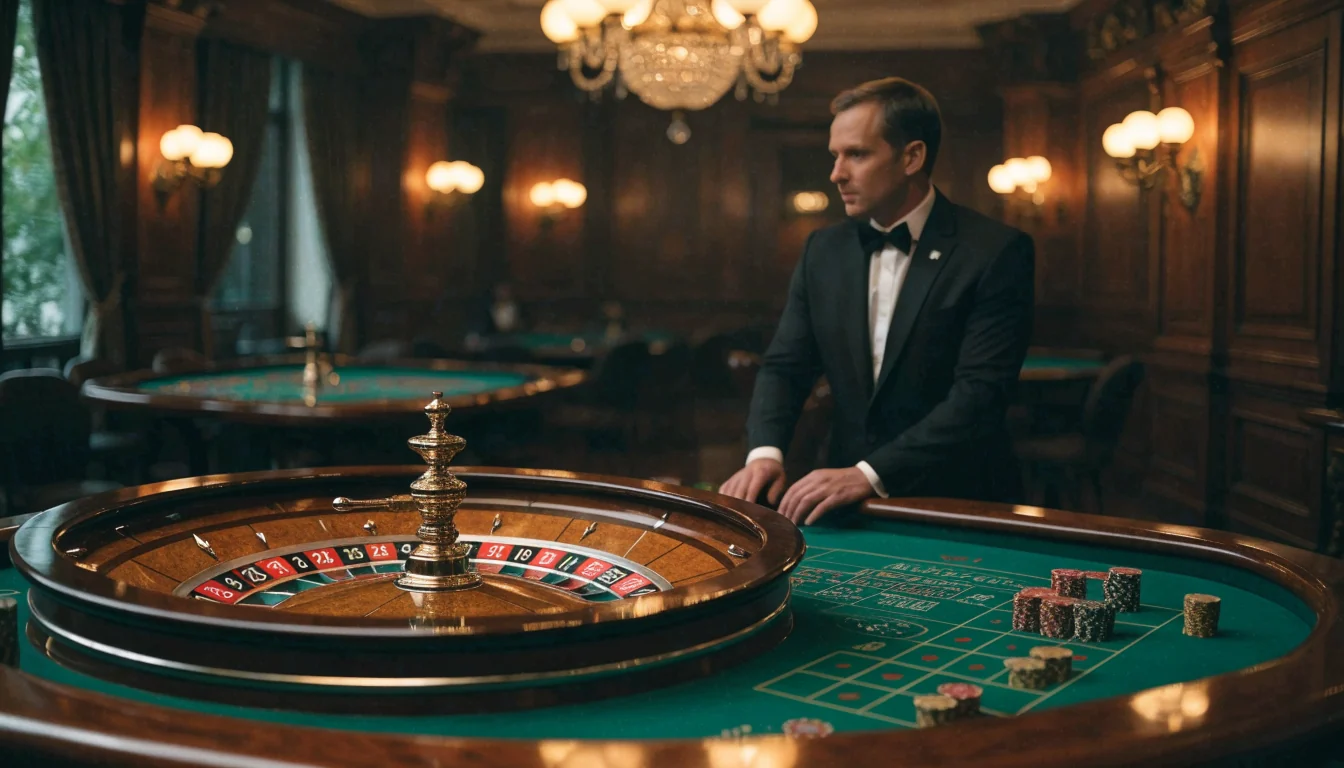
Blackjack rules at a casino can include table-specific details that affect how a round is settled. The headline objective stays the same, but the displayed rules should be read for the conditions that apply at that table. This is especially relevant where a rule is presented in a compact format on screen; a familiar game name does not make every table’s terms identical. The rules and paytable should be reviewed before play, rather than inferred from the general objective.
For a live table, the objective is no different from the objective in blackjack more broadly: beat the dealer while remaining at 21 or less. The live format changes how the game is presented, not the meaning of a valid hand. Keeping that distinction in view prevents a common misunderstanding: the number 21 is an upper boundary as well as a target, and exceeding it does not count as a stronger result.
The practical reading is concise. Compare the player’s total with the dealer’s, and keep the player’s hand within the permitted range. Any table-specific settlement terms sit alongside that core rule; they do not replace it. This is the foundation of blackjack casino rules in the UK, whether the game is presented at a live table or in digital form.
How to Play a Live Blackjack Hand
A live blackjack hand takes place through a video stream and an on-screen betting interface. The dealer is a person at a physical table, not an animation: cards are dealt from a standard deck and shown on camera as the round unfolds. The stream lets players watch the dealing in real time and interact with the dealer where the table provides that option.
Playing a Hand
Follow on-screen prompts to place a bet through the interface after reading the table information.
Watch the real-time video stream as the human dealer physically handles and deals the cards.
Use the digital interface to make selections while the dealer manages the round.
Wait for the table to display the final outcome before moving to the next round.
After joining a table, the first step is to follow the on-screen prompts and place a wager through the interface. The layout may show the betting area, the cards and the current stage of play at once. Before confirming a wager, the displayed table information should be read carefully; a live stream does not replace the need to understand the rules or terms shown there.
Once betting closes, the dealer handles the cards physically. The camera provides the view of the table, while the software communicates the player’s selections to the game. This division matters: the dealer performs the dealing, but the player’s decisions are entered digitally. The screen then updates to show the cards and the available action at that point in the hand.
Play continues through the interface as the dealer manages the round. A live table can feel less immediate than a digital game because the dealing and presentation happen on camera, rather than being generated instantly. The pace is therefore set partly by the dealer’s physical actions and the table’s sequence. Watching the stream and keeping the interface visible helps make it clear when the game is waiting for a player input and when the dealer is proceeding.
When the hand is complete, the table displays its outcome and moves on to the next round. The same cycle repeats: wager through the interface, follow the live dealing, respond when prompted, then review the result. A stable internet connection is important for following this sequence; a delayed or interrupted stream can make the timing harder to track.
Some sites may present free-play blackjack, but any such mode is separate from real-money play and does not provide real payouts. The screen can resemble a live table without making simulated results cashable. Live blackjack is gambling when real money is staked, so a budget should be set in advance and kept intact. This material is for entertainment purposes only, not gambling advice.

Blackjack Bonuses: Check the Weighting Before Counting the Value
A casino welcome offer is not automatically a blackjack offer. A specialist review reports that most UK welcome promotions are free spins for slots, which cannot be used at live tables. That makes the headline value irrelevant to a live blackjack session unless the terms explicitly include the game.
A blackjack casino bonus can also be subject to wagering requirements: conditions that require qualifying play before bonus funds or related winnings can be withdrawn. The key figure is the game weighting. If live blackjack contributes only 10% towards the requirement, only that share of eligible play counts towards completing it. The balance does not disappear from the terms; it remains to be met through qualifying activity.
This distinction changes the calculation. A bonus with a large advertised value may require substantially more eligible play than its headline suggests, especially when blackjack has a low contribution rate. The offer’s value cannot be assessed from the bonus amount alone. Check whether live dealer blackjack is eligible, what weighting applies, which funds count, and whether any withdrawal conditions apply.
The same scrutiny applies to a blackjack no-deposit bonus. The label describes how the offer is presented, not whether it can be used at a live table or withdrawn without conditions. Availability and eligibility need to be confirmed in the operator’s own terms; a general casino promotion is not proof of a live blackjack promotion.
Before opting in, check the wagering requirement, game weighting and maximum bet limit, along with any stated expiry or other conditions. If the terms do not clearly include live blackjack, the practical value for that game is zero. Set a budget before playing, and do not increase it to complete a promotion: the offer is conditional, while the money risked is real.
This is entertainment content, not gambling advice. A promotion should be counted only after its eligibility and conditions are clear; until then, its headline is packaging, not usable value.
What are the different types of roulette you can play with a live dealer?
Common versions include European, American and French roulette. American roulette has both 0 and 00, while European roulette has a single 0; French roulette can reduce the loss on an even-money bet when the ball lands on 0.
How can you win live dealer roulette?
You win when the ball lands on a number you selected. In roulette, the dealer spins a physical wheel and players place their bets through the on-screen interface.
Why does the dealer always win in blackjack?
The dealer does not always win: blackjack players can beat the dealer by making a hand closer to 21 without going over. The game still has a house edge, so players do not win every hand.
How does the house edge change between games?
In roulette, straight-up bets have a 2.9% house edge, compared with 2.7% for other bets. French roulette also offers a rule under which an even-money bet loses only half when the ball lands on 0.
Published by the Muasamthongthai.com team.