Keno Online Casinos in the UK: Rules and Odds
 Available in GB
Keno selections determine which outcomes qualify for a payout, while each draw remains random and site terms shape the game.

Table of Contents
- Keno Online: Random Draws, Fixed Limits
- Keno Rules: Cards, Picks and Matching Numbers
- Comparing Keno Casino Sites by Their Terms
- Keno Odds and Payouts: Read the Paytable First
- Free Keno and Number Selection Before a Draw
- Licensed Keno and the Conditions for Playing in Britain
- Keno Bonuses and Extra Bets: Check the Cost
- Keno Formats: Draws, Multi-Race Cards and Variants
- Playing Keno for Real Money: Set the Budget First
- Video Keno and Slot-Style Play
Keno Online: Random Draws, Fixed Limits
Online keno is a draw-based game in which the result is generated at random. A player makes a selection before the draw, and the game’s random number generator determines which numbers are drawn. The selection can shape which outcomes qualify for a payout under that game’s terms; it cannot steer the draw itself.
That distinction matters because a chosen set can feel personal. It may include dates, repeated digits or numbers that have appeared in earlier games. None of those features gives the selection influence over a legitimate keno result. Each draw is random, and a past result does not make a particular number more or less likely to appear next.
There is no reliable method for identifying a winning set in advance. A pattern spotted in previous results is a description of what has already happened, not evidence that the pattern will continue. Likewise, a number that has not appeared recently is not “due”. Treating either idea as a prediction turns random variation into a story, but does not improve the chance of a win.
Choosing a keno casino in the UK means looking beyond the game itself to practical details such as how quickly you can receive a payout. This list gives you a concise reference point for considering the options.
Payout speed: 1-3 business days Dieselwin lists a payout speed of 1–3 business days, a useful detail to consider when assessing it for online keno.
Payout speed: 1-3 business days NightWin lists a payout speed of 1–3 business days. This gives prospective keno players a clear indication of its stated payout timeframe.
Payout speed: 1-3 business days SpinFormula lists payouts as taking 1–3 business days, providing a concrete detail for players considering its keno offering.
Payout speed: 1-3 business days Revery Play has a stated payout speed of 1–3 business days, a practical point to keep in mind when evaluating it for keno.
Payout speed: 1-3 business days NightLuck lists a payout speed of 1–3 business days, giving players a stated timeframe to factor into their choice.
Payout speed: 1-3 business days Amunbet lists payouts as taking 1–3 business days. This stated timeframe is a useful practical detail for keno players.
Payout speed: 1-3 business days Zombillion has a stated payout speed of 1–3 business days, offering a clear point of reference for players considering it.
Payout speed: 1-3 business days BeOnBet lists a payout speed of 1–3 business days, a practical detail to consider when choosing an online keno option.
Payout speed: 1-3 business days EvoSpin lists payouts as taking 1–3 business days, giving prospective players a stated timeframe to consider.
Payout speed: 1-3 business days Jetsetspins has a stated payout speed of 1–3 business days, a useful practical detail when assessing it for online keno.
What a selection can—and cannot—do
A selection determines what the game will count as a match if the drawn result includes one or more of those choices. It does not change the pool from which the random draw is made or increase the likelihood of any particular result. Manual choices and automated random selections differ in how they are produced, not in their power to affect the draw.
This is the limit on number-selection strategies. Changing selections from game to game, keeping the same set, or choosing numbers based on personal significance cannot guarantee a win. No strategy guarantees success in keno. A system may organise play, but it cannot convert an unpredictable draw into a predictable one.
The same applies to “hot” and “lucky” numbers. A run of appearances may look meaningful, while a long absence may seem to invite a return. Neither observation changes the random process. A number does not retain a memory of earlier draws, and the draw does not respond to a player’s expectations.
The practical boundary is simple: selection affects what counts as a catch; randomness determines whether it happens. The distinction can be easy to lose when results are presented quickly or when repeated play encourages close attention to patterns. But repetition produces more outcomes to observe, not control over the next one.
Random results do not mean cost-free play
Randomness describes how outcomes are produced. It does not mean that the game is financially neutral. Keno should be treated as having a house edge of 25% or more. That is a material cost built into the game’s expected return, not a temporary disadvantage that can be corrected by finding a clever selection.

A single result may still be favourable or unfavourable; randomness does not require each session to follow an average pattern. A win does not establish that a method works, just as a loss does not prove that a different set would have performed better. Short runs can vary sharply. The house edge concerns the underlying terms over time, not a promise about the result of an individual draw.
This is why a memorable win is not a reliable measure of the game’s value. It records one outcome, while the financial terms determine what repeated play costs in expectation. An attractive display or a familiar set of numbers does not alter that calculation.
Before wagering at a keno casino in the UK, the specific game’s paytable, rules and odds need to be checked. Payouts can differ between platforms, so a general description of online keno cannot establish the return for a particular game. The draw may be random in each case while the financial terms remain different. Those are separate questions: how the result is produced, and what the game pays when a result occurs.
For anyone comparing online keno casinos in Britain, the useful distinction is therefore not whether a site offers a supposedly lucky system. It is whether the game’s terms are clear enough to assess before money is placed at risk. A claim that certain numbers, timing or personal routines can overcome randomness has no basis in the mechanics of legitimate keno.
House Edge
Keno should be treated as having a house edge of 25% or more, which is a material cost built into the game’s expected return.
The title “best keno online casino UK 2026” does not change that standard. A site cannot make a random draw predictable, and a selection cannot remove the house edge. The meaningful limits are fixed: outcomes remain uncertain, chosen numbers do not influence them, and the cost of play must be assessed from the specific game’s terms rather than from a pattern or promise.
Keno Rules: Cards, Picks and Matching Numbers
A keno card is a numbered grid running from 1 to 80. Before a draw, a player marks spots on the card. The number of spots available depends on the game: some allow a selection of up to 10, 15 or 20. The chosen spots form the entry for that draw; they are not changed by the numbers that appear afterwards.
Once selections are made, the game draws numbers from the same 1-to-80 range. A keno draw can contain up to 20 numbers, while some variants draw fewer. In online play, the display presents the drawn numbers against the card, making it possible to see which selected spots have been caught. A catch is simply a drawn number that also appears among the player’s selections.
The basic sequence is therefore short: mark spots, submit the card for a draw, then count the catches. A selected spot that is not drawn does not count as a match. A drawn number outside the selection does not count either. Only the overlap between the two sets determines the result.

The number of spots selected matters because it changes what is being matched. A small selection and a larger selection create different possible catch counts. For instance, a card with several selected spots has more selections that could match, but it also asks the game to assess a different combination of picks and catches. There is no single catch total that means the same thing for every card: the selection size is part of the result.
That distinction is central to understanding keno casino game rules. The draw supplies one set of numbers; the card supplies another. The game compares them, then uses the selected spots and catches to determine whether the result qualifies for a payout and what that payout is. The mechanics are consistent at this level, but the exact award attached to a result depends on the game’s own structure. A match count cannot be read in isolation from the number of spots selected.
Some online keno games allow the same selection to be used for more than one game, while others require a new card for the next draw. Where that option is available, it changes how the selection is entered, not how a catch is defined. Each draw still produces its own set of drawn numbers, and its result is assessed against the spots attached to that game.
The same card-and-draw process applies whether play appears on a desktop screen or a mobile keno casino interface. The layout may differ, but the underlying task remains marking spots before the draw and checking which ones were caught afterwards.
Keno is not a game in which a player predicts the order of the drawn numbers. The relevant comparison is between the chosen spots and the numbers drawn, not the sequence in which they appear. A card is assessed by its matches, and the relationship between picks and catches is what makes one result different from another.
In keno, the result is determined by the overlap between the player’s selected spots and the numbers drawn, not by the sequence in which the numbers appear.
Comparing Keno Casino Sites by Their Terms
A comparison of keno casino sites is useful only when it separates the game’s presentation from its financial terms. Two versions can look similar while using different betting structures and payout rules. The name of the game, the speed of the interface and the appearance of a large possible prize do not establish what a stake can return.
The specific game’s rules and paytable need to be checked before play. Payouts vary across platforms, so a result shown for one version cannot safely be assumed to apply to another. The relevant comparison is between the terms attached to each game, not between labels or promotional descriptions.
Compare the same terms
A sound comparison records the conditions that determine how a bet is treated:
- Bet structure: Check how the stake is applied and whether the game allows the same selection to be used across multiple games. The total cost depends on the actual bet setup, not just the amount displayed for a single play.
- Selection rules: Confirm how many spots can be chosen in that version and whether its rules match the format being compared. A paytable has meaning only alongside the selection options it covers.
- Paytable: Check the listed returns for the possible combinations of spots caught. Similar-looking tables may assign different returns to the same result.
- Rules and odds: Read the game-specific rules and odds as well as the paytable. A headline prize, by itself, says little about the full set of outcomes or the terms attached to a stake.
- Stake range: Consider whether the game offers bets within the intended bankroll. A version can be unsuitable even if its rules are clear, simply because its available betting structure does not fit the amount set aside.
This is a comparison of terms, not a method for identifying a winning selection. There is no basis for treating a particular site’s numbers or presentation as a way to improve the outcome.
Read the paytable with the rules
The paytable should be read alongside the rules that define the bet. It is not a standalone promise: the number of spots selected, the result required for a return and the payout assigned to that result all belong to the same set of terms. If any of these details are unclear, the game is not yet comparable with another version.
A useful record is plain: note the selection options, the bet structure and the returns shown for the results covered by the table. Repeat that check for each game under consideration. This avoids comparing a low-stake configuration on one platform with a different configuration elsewhere and mistaking the difference for a better deal.
The house edge also sets a firm limit on what a paytable can mean. Keno should be treated as having a house edge of 25% or more. A table that appears generous does not remove that cost, and no attractive presentation changes the underlying financial terms. A comparison can identify differences between games; it cannot turn the expected cost into an advantage.
Do not compare the display alone
Promotional language may foreground a top payout, while leaving the ordinary betting structure less prominent. The top figure is only one line of a paytable, not a summary of the game’s overall terms. A larger advertised return is not enough to establish that the game offers better value.
- Check the specific game’s rules and paytable
- Compare actual terms across platforms
- Verify that the stake fits your bankroll
- Rely on promotional labels or descriptions
- Assume similar graphics mean identical rules
- Use a top payout figure to judge overall value
The same caution applies when a site presents several versions of keno together. Similar graphics do not mean identical rules, and a general description may not cover every version. The specific game screen and its associated rules are the relevant material. Where the paytable, odds or betting conditions cannot be located or understood, there is no reliable basis for comparing that game with another.
Keno online casino sites can therefore be assessed without ranking operators: compare the actual game terms, confirm that the bet fits the planned bankroll, and check the rules, paytable and odds before wagering. The arithmetic is less impressive than a headline prize, but it is the part that determines the cost.
Keno Odds and Payouts: Read the Paytable First
A keno paytable is the contract between a result and its payout. It shows what a game returns for different combinations of spots selected and spots caught. The same pattern of catches can pay differently across platforms, so a payout quoted for one game cannot be carried over to another. The specific game’s paytable, rules and odds need checking before any wager.
The number of spots selected affects which outcomes the paytable recognises. A table may assign different returns to the same number of catches depending on how many spots were chosen. It may also include outcomes with no catches or partial matches. The relevant comparison is therefore not simply “how much does a win pay?” but how the full set of possible results is treated for that selection.

A high advertised prize is only one line in that calculation. It says what a particular result pays, not how often that result occurs or what the game returns across repeated play. A table can make a rare outcome look substantial while paying less for more common outcomes. The headline figure is packaging; the full paytable is the calculation.
The keno house edge should be treated as 25% or more. In practical terms, that means the expected cost of play is material, even when an individual result pays more than the stake. A favourable-looking prize line does not remove the edge. It describes a possible return under specified conditions, not a promise that the game will repay the amount wagered.
Some published specialist reviews give a broader range of keno house-edge estimates, from 5% to 40%, and note that figures depend on the casino. Such estimates are not a substitute for the terms of the specific game. The prudent working assumption remains an edge of at least 25%; any lower figure needs clear support in the game’s own published information and should not be inferred from a generous-looking top prize.
RTP, or return to player, expresses the proportion of stakes a game is designed to return over a long period. It is the other side of the house-edge calculation, not a forecast for an individual session. A stated RTP can help compare games only when it applies to the exact version being considered and is consistent with its paytable. If the RTP is absent, unclear or detached from the game rules, the payout display alone does not establish the cost of play.
Attention: A high advertised prize is only one line in the paytable and does not indicate how often that result occurs or the game’s overall return.
Paytables also need to be read as a whole rather than selectively. Check the return for each relevant catch pattern, whether any result pays nothing, and whether the stated figures apply to the chosen bet. Rules and payouts vary across platforms; labels that appear similar do not guarantee identical terms. An app is only the interface. It does not make the keno odds better, and an app’s paytable still needs to match the game being played.
The useful comparison is between complete, applicable paytables, with the house edge treated as a real cost rather than an abstract statistic. If the terms do not make clear what each outcome pays, or which rules govern the displayed figures, the expected return cannot be assessed reliably.
Free Keno and Number Selection Before a Draw
Free play separates learning the interface from putting money at risk. A demo version or social casino that uses play money can show how a keno game handles a selection, starts a round and displays its result. No deposit is needed to test those steps, and play-money balance is not a cashable win.
The distinction matters because a free version is a way to inspect the process, not evidence that a game will produce a particular result for money. It can make the controls familiar, but it cannot make outcomes predictable or establish that a paid version has identical terms. Before wagering, the specific game’s rules, odds and paytable still need checking: payouts vary across platforms, and keno has a house edge of 25% or more. A practice screen does not remove that cost.

Manual or random selection
Most interfaces allow spots to be marked manually or filled through an automated random-selection option. Manual selection can suit someone who wants to repeat a chosen pattern; random selection removes that decision from the player. Neither method improves the chance of catching a spot. In legitimate keno, the draw is random, so a preferred pattern has no special influence over the result.
Free play can make it easier to see how those options behave without turning the choice into a financial decision. A player can check whether the selection remains in place between rounds, whether it must be confirmed before play, and how the game indicates a match. These are interface details, not advantages in the draw. A repeated selection may feel more deliberate, but repetition does not make it more likely to win.
The same basic approach applies when learning how to play keno online: use a demo or play-money version to understand the controls, then treat any later wager as a separate decision. The point is not to find a winning combination through practice. Replaying a game can demonstrate its sequence, but it cannot reveal numbers that are more likely to appear next.
What free play can establish
A keno casino game in free play can show whether the layout is clear and whether the selection and result screens are easy to follow. It can also help distinguish the game’s controls from its terms. Those terms matter once money is involved: the available picks, betting structure and payout table can differ between games, so the relevant paid game must be checked on its own.
Free versions may be labelled as demo play, practice play or play-money games. The label does not change the central limit: there is no financial stake in the practice session, and no practice result predicts a future draw. That makes free keno useful for learning the interface, but not for testing a system or forecasting returns.
Manual vs Random Selection
Manual selection allows a player to repeat a chosen pattern, while random selection automates the process. Neither method improves the chance of catching a spot, as the draw remains random in legitimate keno.
Licensed Keno and the Conditions for Playing in Britain
A keno game offered for real money to customers in Great Britain falls within the UK gambling framework. The operator must hold the relevant licence from the UK Gambling Commission, whether it is based in Britain or elsewhere. A live presentation does not change that requirement: the format is not an alternative to licensing. A site’s claim that it offers live keno is not proof that it is authorised to serve British customers.
For online gambling to be legal in the UK, play must take place through a licensed and regulated site. Offshore operators without a UKGC licence sit outside that system. The relevant distinction is not whether a site looks established, but whether it holds the required operating licence for the British market. This applies to keno as it does to other casino games.
Age checks are a condition of access to deposits. A licensed operator must verify a customer’s age before allowing funds to be deposited into a gambling account; the legal minimum age is 18. Registration alone should not be treated as evidence that verification has been completed. The check is a safeguard applied before gambling money can enter the account, rather than a formality to be left until a withdrawal is requested.
Financial controls also begin before the first deposit. Remote operators must prompt new customers to set a financial limit before that deposit and make account-level limit controls accessible. These controls provide a way to restrict future spending; they do not alter the game’s results or turn a limit into a spending target. A separate decision about an affordable budget remains necessary, with the amount set in advance and loss-chasing avoided.

Payment restrictions apply to the route as well as the card itself. UK-licensed casinos cannot accept credit cards for gambling. That prohibition also covers credit-card funds routed through a money service business, and operators cannot accept wallet payments where the wallet permits credit-card money to fund gambling. A payment method’s familiar branding does not make a prohibited funding source acceptable.
Licensed operators must also provide responsible-gambling tools, including self-exclusion. Customers must have access to an internal complaints process and to an approved Alternative Dispute Resolution service if a complaint is not resolved through that process. These are account and consumer-protection conditions, not features that improve the keno paytable. For any online keno or live casino offer, the licence status and the available controls are part of the terms under which play is permitted.
Keno Bonuses and Extra Bets: Check the Cost
A keno bonus changes the terms attached to an account or wager; it does not change the draw or improve the underlying odds. A no-deposit offer may sound cost-free, but its value depends on the conditions for using and withdrawing any resulting winnings. The headline amount alone does not show what can be played, what counts towards any conditions, or whether a cash deposit is needed before funds can be withdrawn. Those details need to be read before accepting the offer.
The calculation starts with the amount of the player’s own money at risk, then separates it from bonus funds and any restrictions attached to them. If an offer requires wagering, the relevant question is how much play is required and whether keno wagers qualify. If the terms do not make that clear, the bonus value cannot be reliably calculated. A bonus is not a reduction in the cost of a bet unless its conditions actually reduce the player’s own outlay.
Extra bets need the same treatment. A specialist review describes keno games with optional side bets such as multipliers, but that should not be taken as a feature of every game. Where an extra is available, check its price and the payout table that applies to it. A multiplier may raise a potential return while also increasing the stake; a larger possible payout is not a larger expected value by itself.
The total wager can also rise when the same selection is played across multiple games. Players can choose a bet size and may have the option to repeat a selection, so the cost is determined by the stake and the number of games entered, not just by the amount shown for one round. Bonus conditions can make this less straightforward if only certain wagers qualify.
Keno payouts differ between platforms, and an offer does not replace the game’s paytable. Before wagering, check the specific game’s rules, paytable and odds, including whether any bonus or optional extra changes the applicable terms. Keno should be treated as having a house edge of 25% or more; a bonus or multiplier does not remove that cost. Bitcoin payment wording, where present in casino marketing, is separate from the value of a keno offer and says nothing on its own about the game’s return or bonus conditions.
Keno Formats: Draws, Multi-Race Cards and Variants
Keno formats differ in how many numbers are drawn and whether a selection applies to one game or several consecutive games. Those differences affect the shape of a round, but they do not turn the draw into a predictable event.

In standard online keno, a round draws 20 numbers at random. Some variants draw fewer. A smaller draw changes the format, not the basic idea: a player’s spots are compared with the numbers drawn, and the result belongs to that round. The game name alone may not make the draw size clear, so the rules for the specific version matter.
One draw or several
A single-game format applies the selected spots to one draw. A multi-race card carries the same selection across consecutive keno games. This saves repeating the selection for each round, but it does not increase the chance of catching a spot in any individual draw. Each game remains a separate outcome; reusing a selection is a convenience, not an advantage.
The number of consecutive games covered by a multi-race card depends on its terms. Those terms should be read before play, particularly where the card commits a stake across multiple rounds. A series of games can produce more results to review, but it does not make the underlying results more favourable.
Live and online formats
The label “live keno” describes a presentation or draw arrangement, not a promise of better results. The relevant distinction is the game’s stated format: how many numbers are drawn, whether a selection covers one round or several, and what rules govern the card. An online casino may offer different keno formats, but availability of a live presentation should not be assumed from the word “keno” alone.
A round where 20 numbers are typically drawn at random and compared against the player’s selection.
A format that carries the same selection across several consecutive keno games for convenience.
A presentation or draw arrangement that does not alter the underlying game rules or results.
Keno is not one uniform product across every platform. Before wagering, check the specific game’s rules, paytable and odds, and confirm how its format handles each round. Payouts vary across platforms, and keno should be treated as having a house edge of 25% or more. A multi-race card changes how a selection is carried forward; it does not remove that cost or improve the draw.
Playing Keno for Real Money: Set the Budget First
Real-money keno turns each stake into money at risk. A budget set before play gives that risk a fixed boundary: decide the total amount available for the session, then stop when it has been spent. The amount should come from discretionary funds, not money reserved for bills or other commitments.
The stake size matters because repeated bets can use up a budget faster than a single wager suggests. Players can choose their bet size, so the total exposure depends on both the amount placed per game and how long play continues. A specialist review reports a minimum stake of £1, but that should not be treated as a universal rate: available stakes depend on the game. The practical check is whether the permitted bet sizes fit within the amount already set aside.
A budget is a spending limit, not a target to reach. If a session ends with money unspent, there is no financial reason to use the remainder. If the budget is gone, increasing it to recover losses changes the original decision after the result is known. That is loss-chasing, and it adds fresh money without removing what has already been lost.
Keno has a house edge of 25% or more. That cost makes real-money play unsuitable as a way to earn income or recover previous losses. A run of wins does not cancel the underlying disadvantage, and a run of losses does not make a win due. No number choice or betting system guarantees a return.
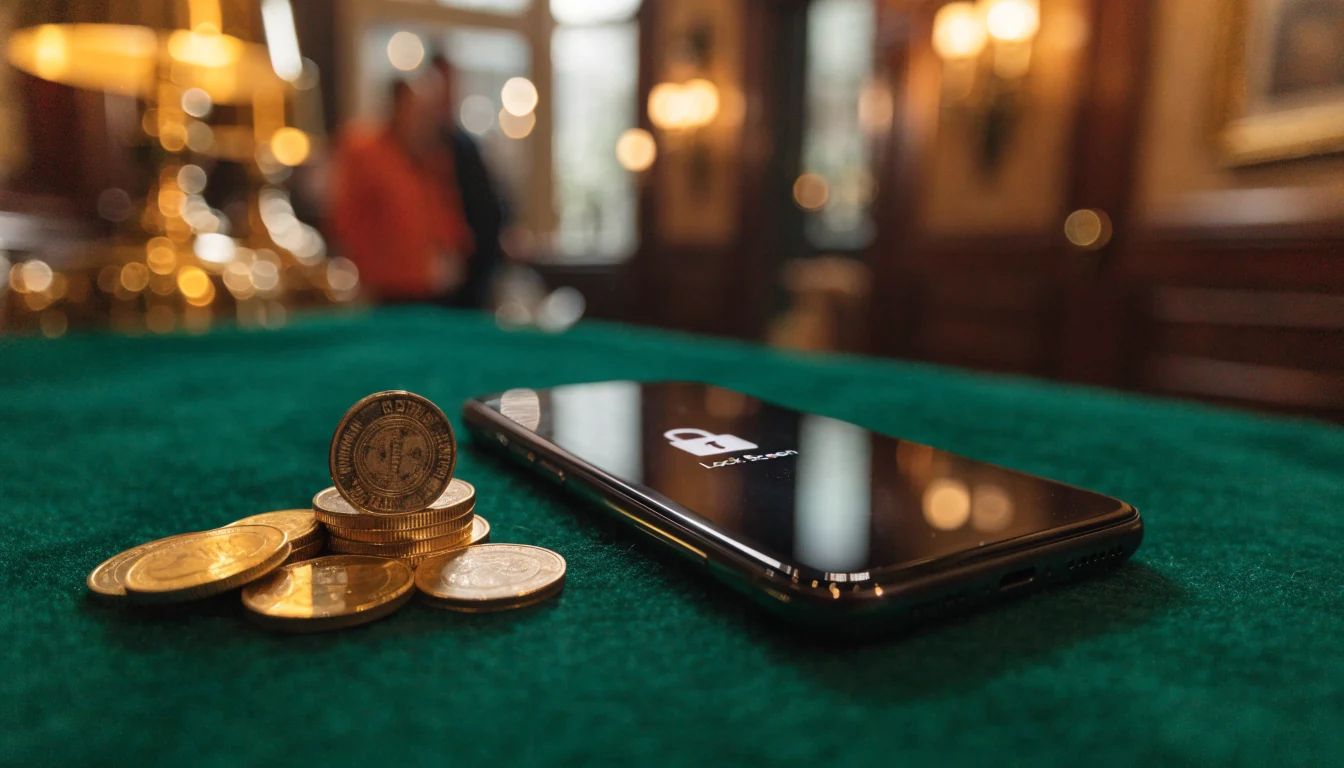
For anyone considering keno online for real money, the decision is therefore less about finding a winning pattern than defining an acceptable cost. A fixed budget limits the amount exposed; it does not improve the chance of a favourable result. Once play begins, keeping the original limit intact is the only way that budget can do its job.
Video Keno and Slot-Style Play
Video keno can look like a slot because it is played on screen and presents results in a compact, game-like format. The resemblance does not make the financial terms more favourable: the odds in video keno are about as bad as those on slot machines. Keno has a house edge of 25% or more, so repeated play carries a cost even when a session includes wins.
The label matters less than the paytable and rules attached to the game. Before wagering, check the specific game’s paytable, rules and odds, including how its payouts vary. A polished interface does not change those figures. For anyone deciding whether to play keno at an online casino, the relevant comparison is the stated return structure, not the speed or animation of the display.
Britain’s rules for online slots apply to slot play, not automatically to every game that shares a screen-based format. Online slot spins must last at least 2.5 seconds, and autoplay is banned. A game marketed as video keno should therefore be assessed by its actual classification and terms; visual similarity alone does not establish that it is an online slot.
This distinction is useful when considering whether to play keno slots online or use a keno game with a different presentation. If the game is an online slot, the spin-duration and autoplay restrictions apply. If it is keno, its own paytable and rules determine how the wager is settled. The interface is packaging; the conditions determine the calculation.
Free play can show how a particular video-keno screen works without putting money at risk, but it does not improve the odds when switching to real-money play. Nor does an animation make a losing result less costly. The format can be convenient to follow, but convenience is not a return.
How do you play Keno?
Choose numbers on a card numbered 1 to 80, set your bet and submit it before the draw. The game randomly draws numbers, and your payout depends on how many of your picks match.
How does Multi Keno work?
Multi-race play lets you use the same numbers across consecutive Keno games. It does not increase your chances of winning.
How do I choose a line and place a bet?
Select the numbers you want on the card, then choose your bet size before submitting it for the draw. You can pick numbers yourself or use an automated random selection.
How many numbers can I choose in Keno?
It depends on the game: available selections can range up to 10, 15 or 20 numbers. Check the game’s rules to see its selection limit.
How important is it to pick the right Keno game?
It matters because rules, paytables and house edges vary between games. Check the paytable and choose a game with bets that fit your budget.
Is the payout guaranteed?
No. Keno outcomes are random, and no selection or strategy guarantees a win.
How much does it cost?
Minimum stakes are £1. The amount you wager depends on the bet size you choose.
Written by the editors at Muasamthongthai.com.